



Countersinking and deburring tools
Burr-free happy
You can process drill holes and exits quickly and cleanly with our countersinking and deburring tools. This saves you valuable time during machining operations.
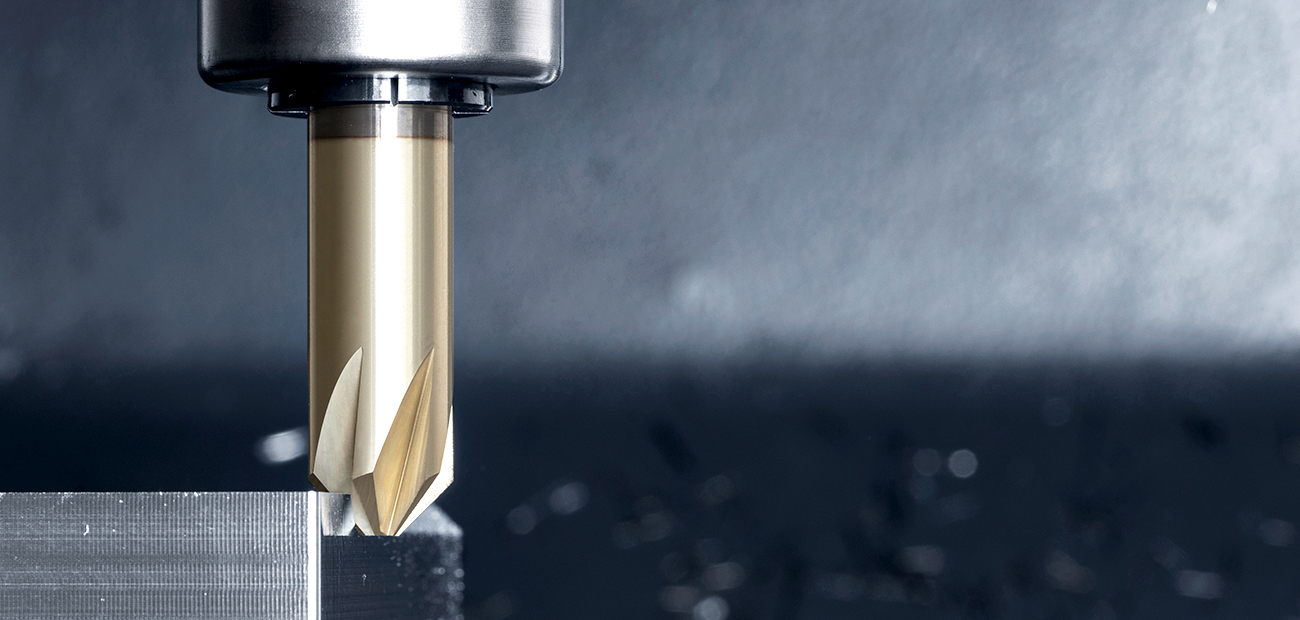
Deburring tools
Different types of deburring tools
The right tool is recommended for professional deburring: there are different types of deburring tools that have been specially developed to remove sharp edges and burrs from workpieces. For example, hand files or grinding stones are used in the manual deburring process. This is often carried out on smaller workpieces. Mechanical deburring involves the use of special machines equipped with grinding, milling or cutting tools. These machines can process large quantities of workpieces precisely and efficiently.
What is deburring?
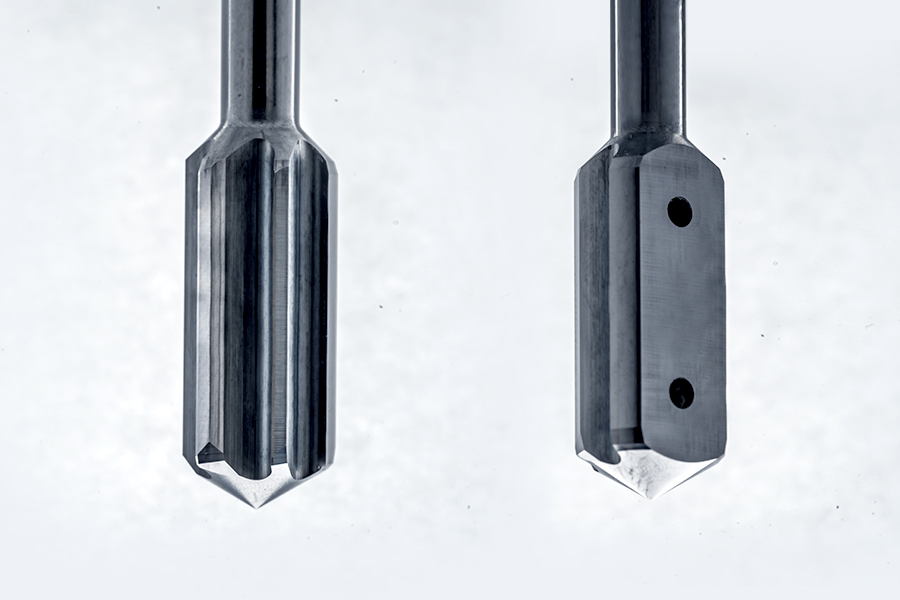
Deburring is a process in which sharp edges, burrs or excess material are removed from a workpiece to create a smooth surface. This finishing technique is particularly important in the manufacturing industry, as sharp edges can not only be unsafe, but also affect the quality of the finished workpieces.
Gühring offers a comprehensive standard range of deburring tools for the mechanical removal of burrs at the hole entry, hole exit and cross-hole exit – including the world’s first solid carbide tools for mechanical entry and exit deburring. Instead of time-consuming and cost-intensive manual labour, you can shorten the machining in a fully automated work process with machine deburring.
Machine deburring
Automation in metalworking
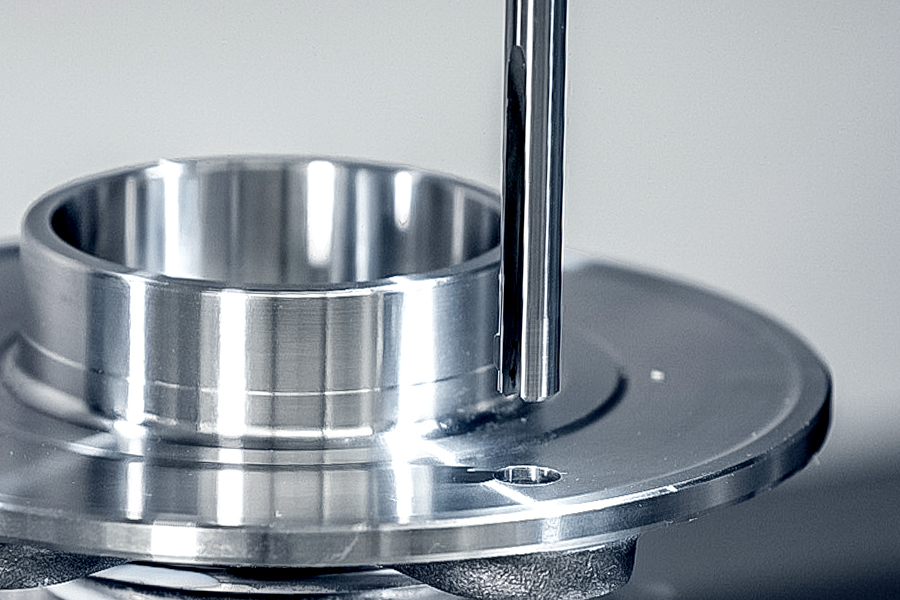
Specialised deburring machines are often used for industrial deburring methods. The choice of the appropriate machine deburring process depends on various factors such as the type of materials, the required precision and the production requirements. Different deburring units such as deburring spindles, milling cutters, drilling spindles, polishing spindles, belt grinding units or brushes are used.
Which machine processes are available for deburring?
Mechanical deburring methods are categorised according to DIN 8587 to DIN 8589 and include:
- deburring milling
- grinding, brushing, polishing
- thermal or chemical removal
- electrochemical removal
Cost-benefit-analysis: When is it worth investing in machine deburring?
The decision to invest in machine deburring depends on various factors. Here are some considerations that should be taken into account when making an assessment:
1. Production volume
The higher the production volume, the more an automated deburring makes sense. Automated deburring methods are generally faster and more efficient, which leads to increased production capacity.
2. Cost efficiency
In many cases, machine deburring processes can be more cost-effective than manual labour, as machines can work around the clock without breaks or fatigue.
3. Quality standards
Machine deburring processes can provide a higher precision and consistent quality, especially on complex metal parts. This is particularly important when surface technology is required for high quality standards.
4. Cost benefit analysis
A cost-benefit analysis can be used to determine within an overall assessment whether a machine deburring makes sense.
Materials and tools for metalworking
The most common materials for deburring are carbide, steel or HSS and ceramics.
| Material | Properties | Use |
|---|---|---|
| (High-grade) steel | different degrees of hardness depending on the alloy, stainless | for wet applications |
| High speed steel (HSS) | high degree of hardness and toughness, good heat resistance, low wear, shock resistant | for soft and thin-walled workpieces, at low speeds, for applications susceptible to impact and vibration |
| Carbide | very high degree of hardness, temperature-resistant, low wear, vibration-sensitive | for workpieces made of metal (e.g. high-grade steel), plastic and wood, at very high speeds |
| Carbon steel | very high degree of hardness and edge retention, easy to sharpen, susceptible to rust | for especially hard materials |
| Ceramic | high degree of hardness, stainless, non-sparking, non-magnetic, non-conductive, chemically continuous, heat-resistant | for light metals and plastics, with the use of chemicals |
| Tungsten carbide | extremely high degree of hardness, extreme heat resistance, low wear | at high speeds |
Why HSS deburring tools are indispensable for your workshop
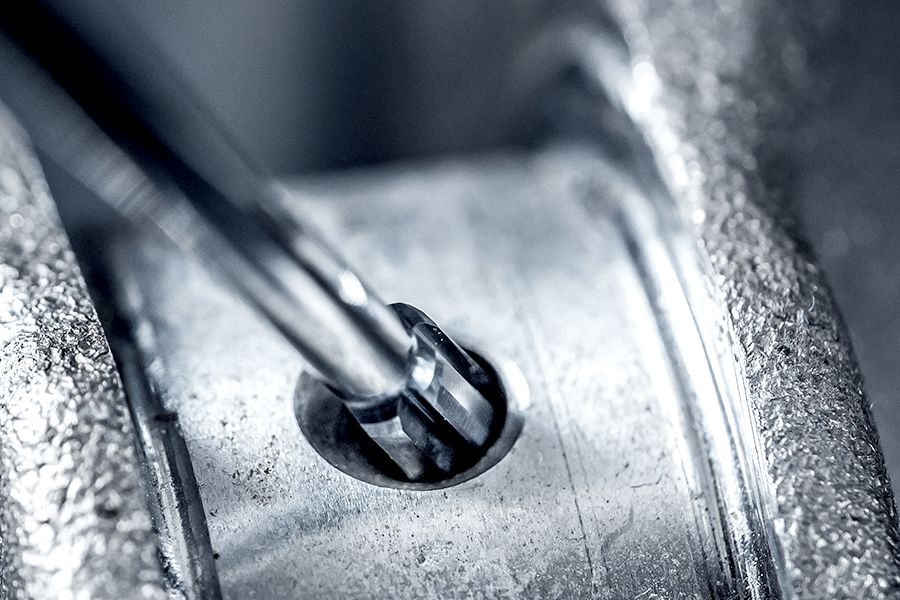
HSS deburring tools are indispensable for workshops as they are durable and resistant due to their high hardness and tool strength. With sharp cutting properties and high heat resistance, high speed steel tools are suitable for precise removal of burrs from various materials. Their versatility allows them to be used in the machining of metal, plastic and composite materials. The sharpenability and cost efficiency make HSS deburring tools an economical choice for precise and efficient deburring.
Why carbide deburring tools are worth the investment
Carbide deburring tools are a worthwhile investment due to their extreme hardness and softness, ensuring a long life and high level of performance. With outstanding heat resistance, they are ideal for demanding deburring work at high temperatures. The precision and cutting performance of carbide enable efficient deburring of various materials with high accuracy. Although the acquisition costs are higher, carbide deburring tools offer an excellent return on investment in the long term due to their tool life and performance.

 Academy
Countersinking tools
What is countersinking and how does it work?
The countersinking is a process for reworking existing drill holes. Burrs often form during drilling of metal. These burrs can be very sharp and pose a risk of injury. For safety reasons, these burrs should therefore be removed after drilling. Countersinking tools are also often used to countersink screw heads so that they are flush with the workpiece surface.
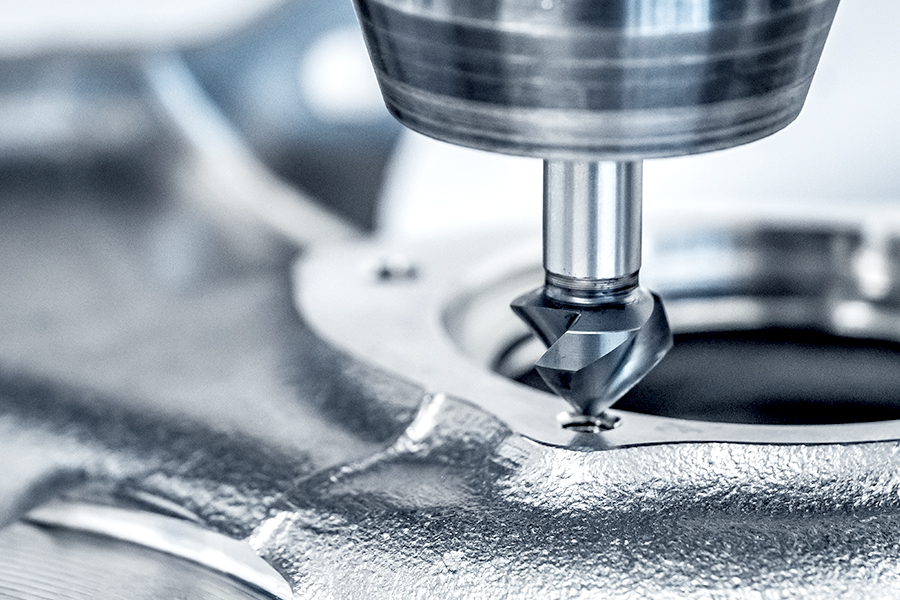
Different types of countersinking tools
There are various countersinks that perform different functions. They are divided into:
- countersink
- transverse hole countersink
- counterbore/pin countersink
- plug countersink
Countersinks
Applications and benefits
As the name suggests, the head of the countersink has a conical shape. The conical shape causes deburring or countersinking into the existing drill hole. This makes countersinking an efficient solution to deburring drill holes and edges, removing sharp burrs and achieving smooth surfaces. Thanks to their versatility and different sizes, countersinks are suitable for various applications and materials.
Countersinks usually have three cutting edges, whereby the number of cutting edges is often odd in order to avoid “chattering” in the workpiece. The countersink angle is crucial for countersinks. There are different angles that are intended for different applications:
- 60° for deburring and for insertion chamfers, e.g. for sealing rings
- 75° for rivet heads
- 82° for countersunk screws, US standard
- 90° for countersunk screws
- 120° for countersinking sheet metal rivets
Counterbores
Application areas and selection criteria
Compared to countersink bits, counterbores have a cylindrical shape. Counterbores are used to create countersinks for cylinder head screws, hexagon screws and nuts, which are then flush with the surface of the workpiece.
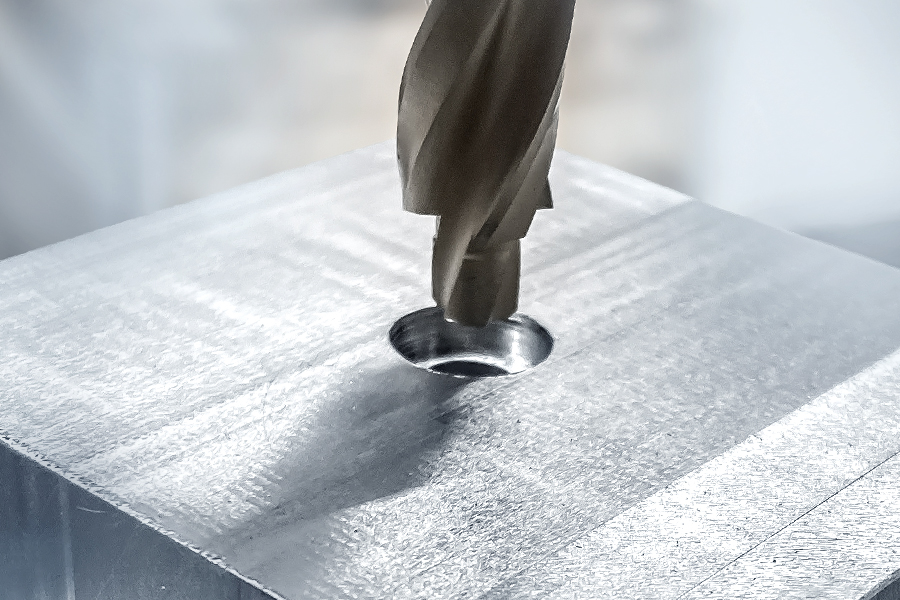
Counterbores for metal as a solution for precise countersinking
The cutting edge geometry and coating of the counterbore is designed for the specific requirements in metalworking to ensure clean and smooth countersinking. When selecting a flat countersink for metal, it is important to consider the hardness of the metal and the desired countersinking depth to achieve optimum results and a high grade. You can find a selection of flat countersinks for metalworking in the Gühring online shop.
Counterbore with spigot: increase the accuracy of your work
A fixed pilot is located on the front part of the flat countersink, which is inserted into the pre-drilled hole. This ensures stable guidance of the tool and precise countersinking. The cutting edges perform machining the material and make room for the head of the screw.
For which materials are counterbores particularly suitable?
Counterbores are primarily suitable for the machining of soft to medium-hard materials. For example, the tools are ideal for producing a countersink in aluminium, as they are less prone to tilting in this soft metal and produce a smooth surface with a high quality grade. They also enable precise machining without excessive wear in other soft metals such as copper and brass. Counterbores can also be used successfully in light alloys and even in hard materials such as steel and cast iron. But counterbores are also well suited for the machining of plastics such as PVC, acrylic, nylon and wood. These tools produce clean edges and minimise the risk of fraying.
Focus on flexibility: counterbore with interchangeable pilot
A counterbore offers the option of exchanging pilots as required. This increases the versatility of the tool and allows different countersinking operations to be carried out with the same tool. Counterbores with detachable pilots can be found in the Gühring online shop.
Countersink vs. counterbore
Countersinks and counterbores differ in shape, application and cutting edge geometry. Countersinks have a tapered shape, while counterbores have a flat, straight cutting edge. The choice between the two tools depends on the specific application and material requirements.
Highlights
Countersinking and deburring tools
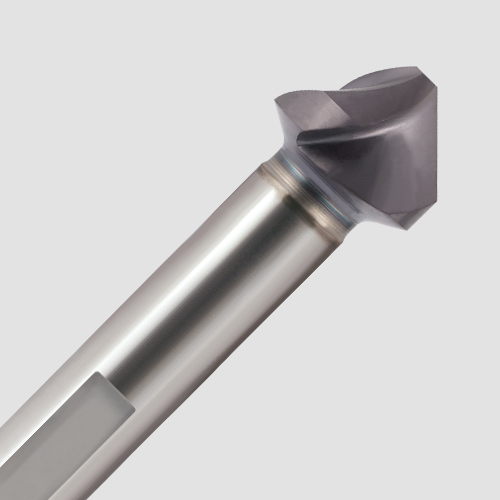
Spiralised HSS/HSCO countersink
SpyroTec
Comfortable countersinking with convex cutting edges
Axial and radial forces that occur during countersinking operations are greatly reduced by the newly developed geometry of the SpyroTec’s cutting edges. Thanks to the spiralised main cutting edges, the SpyroTec countersink pulls itself like a corkscrew into the material to be machined.
Your advantages with the SpyroTec:
- universal application in almost all materials
- circular, precise and chatter-free countersinking
- 60% lower feed force
- 50% lower radial force
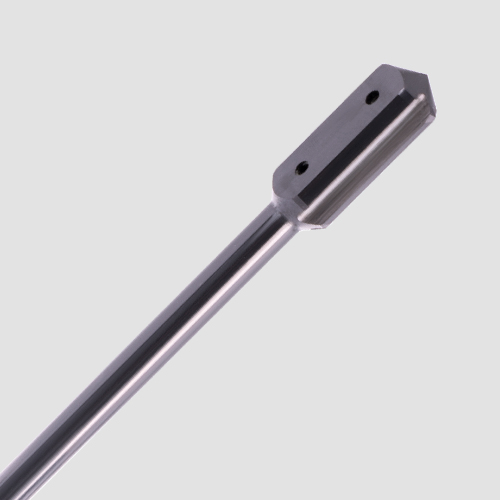
Solid carbide deburring reamer
EWR 500
Safe deburring of cross holes
The EWR 500 solid carbide deburring reamer can be used to achieve process-reliable removal of burrs. Cooling pressure is applied to close the gap between the reamer and the hole wall. This pressure enables the burr to be cut cleanly at the root.
Your advantages with the EWR 500:
- surface quality of the reamed hole is retained
- short process times, as it is possible to perform rapid traverses outside the cross holes
- flexible diameter range
Solid carbide deburring fork
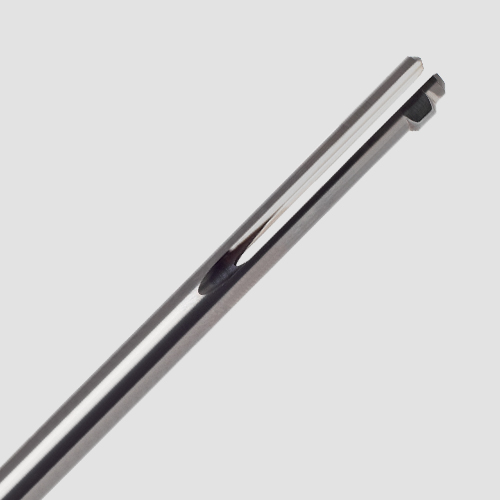
EW 100 G
One tool for all working steps
The automatic entry and exit deburring with the deburring fork EW 100 G is a simple and cost-effective alternative to the previous, time-consuming reworking by hand. A single tool is used for all working steps application.
Your advantages with the EW 100 G:
- for universal application on machine tools, milling, lathes, and robots
- Ø bridging of 0.25 mm for holes with large tolerances
- increase productivity through machine deburring in a clamping setup or during secondary time
- expensive and time-consuming manual reworking is no longer necessary
Front/back deburrer
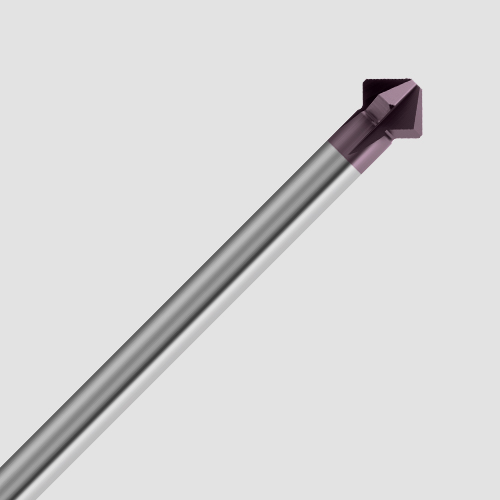
EW 100 VR
90° deburring and chamfering of holes
The Gühring EW 100 VR front/back deburrer made of solid carbide with TiAlN coating is a standard tool that can be used for both deburring and chamfering hole entry and exit points at a 90° angle. The EW 100 VR has a milling head with a front and rear cutting area for this purpose.
Your benefits with the EW 100 VR:
- for front/back deburring and chamfering, even in hard-to-reach areas
- machining of upper and lower edges on holes and component contours
- large range thanks to stepped shank/neck diameter
Application
Countersinking and deburring tools in the application
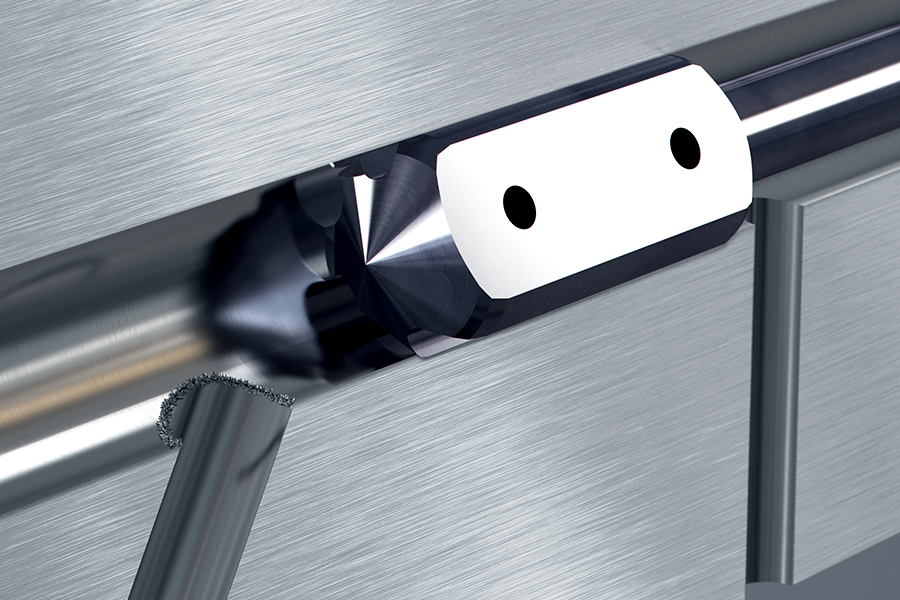
Countersinks and deburrers for metal and other materials are easy to use. The tool is simply placed on the edge to be deburred and pressure is applied. It is sufficient to run the blade along the edge of the object. In machining processes, double-sided deburring techniques can increase productivity, as there is no need for manual handling and turning of the workpieces and thus no second deburring step.
How to choose the right deburring milling cutter for your project
Selecting the right deburring milling cutter for your project requires careful consideration of various factors. Here are some steps and considerations that can help you make your selection:
Material type: What do you want to work on?
Deburring milling cutters are available for various materials such as metals, plastics or composites. Select a milling cutter that is suitable for the specific material to achieve optimal results.
Cutting edge geometry: How many cutting edges do you need?
Depending on the requirements of your project, you can choose between different cutting edge geometries. For example, multi-flute milling cutters are efficient for machining long contours and large series.
Milling cutter diameter: How large should the chamfer be?
The chamfer to be produced influences the size and cutting edge length of the required milling cutter. Select a milling cutter with a diameter and length that is suitable for the size and position of your deburring task.
Type of deburring: What should the deburring look like?
Determine if you have a conventional deburring, edge rounding, defined bevel size and angle, or other specific deburring requirements.
Cutting material: Which tool material and coating are required?
The material composition of the milling cutter is important as it affects durability and performance. High-speed steel (HSS), carbide and other tool materials with suitable coatings are used depending on the application.
Quality of the end product: How good must the result be?
Consider the level of quality you require for the end product. Precision milling cutters can produce high-quality surfaces and clean edges or chamfers, while coarser tools may be suitable for less demanding applications.
Which tool is suitable for axial or radial machining?
In terms of their machining direction, countersinking and deburring tools can be categorised as follows:
Axial machining:
- countersink
- counterbore
- taper countersink
- deburring reamer
- deburring fork
Radial machining:
- deburring milling cutter
- chamfering milling cutter
- Front/back chamfering milling cutter
You can find the right deburring milling cutter for your application in our online navigator.
 Navigator
How to determine the matching size of a flat countersink?
Depending on the size of the clamping screw to be countersunk or the drill hole to be countersunk, it is important to choose a counterbore with a diameter that is slightly larger than the diameter of the drill hole. This ensures clean and precise countersinking results. The appropriate countersinking tools for each thread size can be found in the catalogue or online shop. Furthermore, the desired depth of the countersinks and the material to be machined should be taken into account.
Precise deburring for flawless drill holes
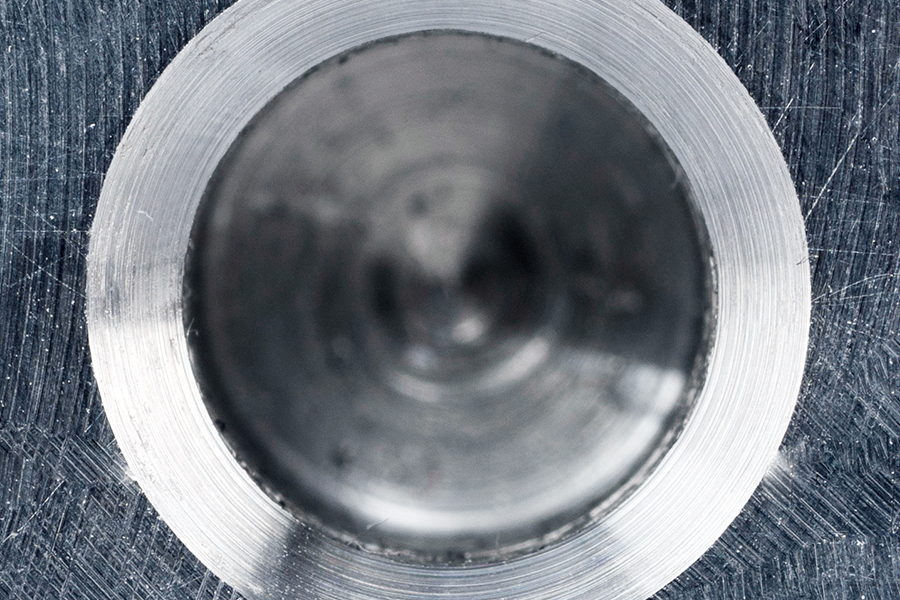
Machining deburring holes is an important step in removing sharp edges and improving surface quality. These tips should help you to perform deburring drilling effectively and efficiently.
Choose the right cutting parameters
Cutting speed and feed can vary depending on material and tool type. In addition, a lower speed should always be used for countersinking than for drilling. The matching cutting parameters can be found in our online navigator.
Coolant extends the tool life
Use coolant to extend the tool life and improve deburring quality. Coolant also helps to dissipate heat and increase machining accuracy.
Creating stable machining conditions
Rely on material specialists
Use special deburring tools that are suitable for your application. Take into account the material properties, in particular hardness and toughness, to select the deburring tools accordingly and adjust the processing parameters.
High quality through control and optimisation
Implement regular quality controls to ensure that holes are deburred effectively and the desired tolerances are met. By continuously monitoring the deburring process, you will find opportunities for optimisation to increase efficiency and quality.
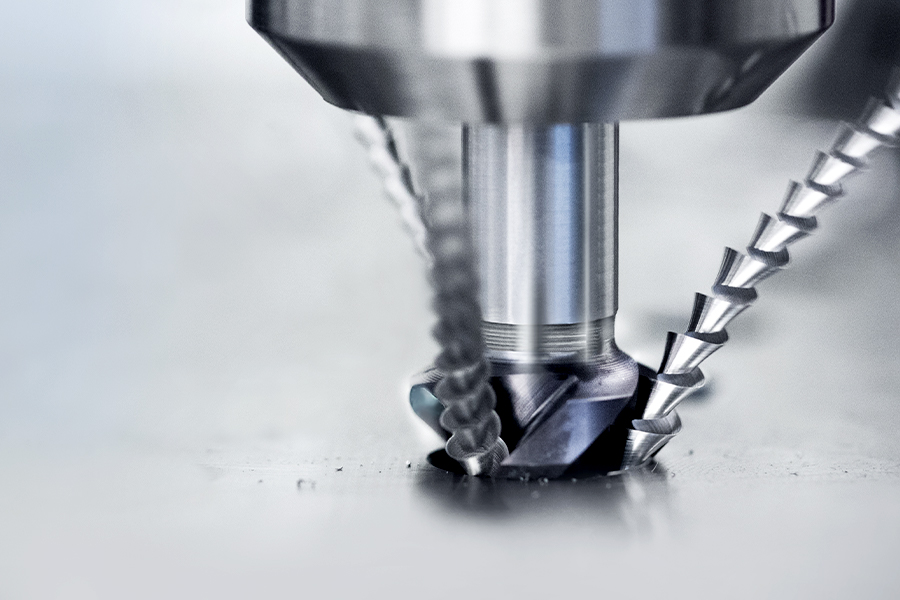
The role of coatings in countersinking and deburring tools
Coatings play a crucial role in countersinking and deburring tools by providing wear protection, reducing friction and improving chip removal. They increase heat resistance, promote better surface quality and have non-stick properties. These coatings help to extend the tool life, increase machining efficiency and optimise costs in the long term.
Best practices for the maintenance of countersinking and deburring tools
Maintaining countersinking and deburring tools is critical to their performance and durability. A best practice is to store them properly in their packaging or with a protective cap to prevent damage. It is important to store the tools in a dry place to prevent rusting. Before use, they should be thoroughly inspected for damage or wear. By following these simple steps, the efficiency of the tools can be maintained and their life extended.
 Newsletter
Grooving and turning tools
Discover precision that catches the eye
Threading tools
Do you want perfectly formed threads? Click here for the right tool
Milling tools
With these milling cutters, chips fly exactly as you want them to


