



Mould and die
Shaping the future together with Gühring
Mould makers place high demands on cutting tools – after all, these are responsible for 90% of product quality. Gühring meets this challenge with decades of expertise and innovative tools. Because success begins with the supplier.
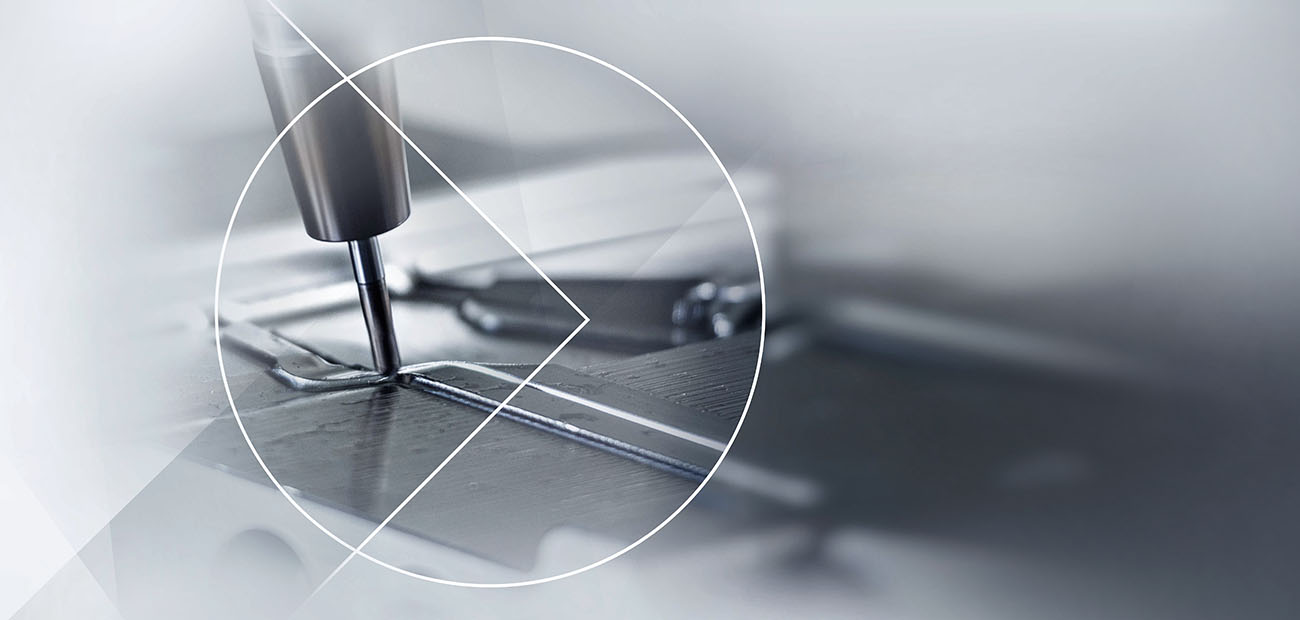
Introduction to mould making
Mould and die are key elements in industrial manufacturing. They play a crucial role in the production of numerous products, from ballpoint pen barrels and glass drinking bottles to plastic toys and chocolate Santa Clauses. However, competitive pressure, a shortage of skilled workers and the trend towards miniaturisation are posing growing challenges for companies in mould and die. To overcome these challenges, a great deal of expertise in machining is required – as well as a reliable tools supplier. Gühring has seen itself as a technological partner in tmould and die for many years and knows the needs of the industry.
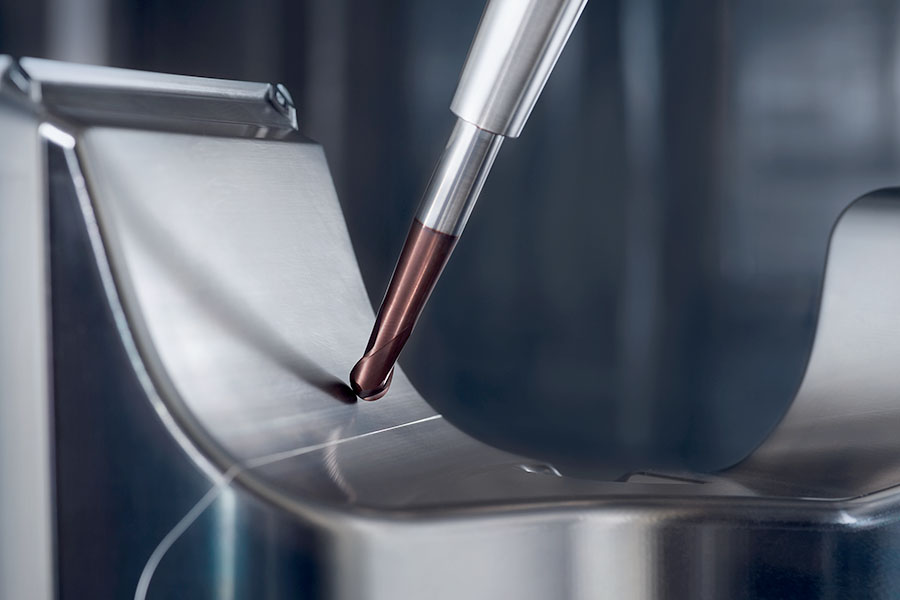
An introduction to the industry
What is mould making?
Mould making involves the design and manufacture of moulds and tools, which are then used to produce parts from a wide variety of materials such as plastic, metal or glass. A distinction is made between primary forming and secondary forming. In primary forming processes, a hollow space in the mould, also known as a cavity, enables parts to be produced in the desired shape. Mould and die make use of the techniques of primary forming. Secondary forming encompasses processes in which material is permanently deformed with the aid of forming tools. The most common disciplines in mould and die are the stamping technology (forming) and injection moulding toolmaking (primary forming).
Requirements and challenges in mould and die
The mould making industry faces many challenges: on the one hand, manufacturers are in constant competition with companies from abroad and, in order to remain economically viable, must increase production times and cost efficiency. On the other hand, there are fewer and fewer quality specialists for manufacturing. All of this leads to an extremely high degree of automation in manufacturing. However, this is only possible if companies can rely on standardised processes that run unmanned and achieve reproducible results. Manual reworking is also not an option due to enormous deadline and cost pressures. Mould making is therefore a demanding field that requires guaranteed process reliability as well as the highest precision and quality. To achieve this, companies need in-depth knowledge of materials, manufacturing techniques and CAM strategies – but also high-quality cutting tools. Gühring meets the high requirements of mould and die with the largest portfolio of standard tools on the market, tools and process templates specially designed for mould and die, and manufacturing know-how with 100% depth of production.
You are currently viewing a placeholder content from YouTube. To access the actual content, click the button below. Please note that doing so will share data with third-party providers.
More InformationBasics and applications
Machining techniques in mould and die
Machining techniques are indispensable in mould and die. They include processes such as milling, turning and drilling. However, only tools and moulds with the highest precision can ensure that the finished end products have the correct dimensions and surface qualities. Gühring therefore relies on Germany as its manufacturing location and is continuously expanding its production and metrology – for tools you can rely on.
Fundamentals of mould making
Mould making is considered the premier class of machining because its high degree of automation from lot size 1 onwards requires a wide range of skills and knowledge. Every mould is a masterpiece and, as such, unique. However, there are universal principles and techniques that are frequently used in mould making.
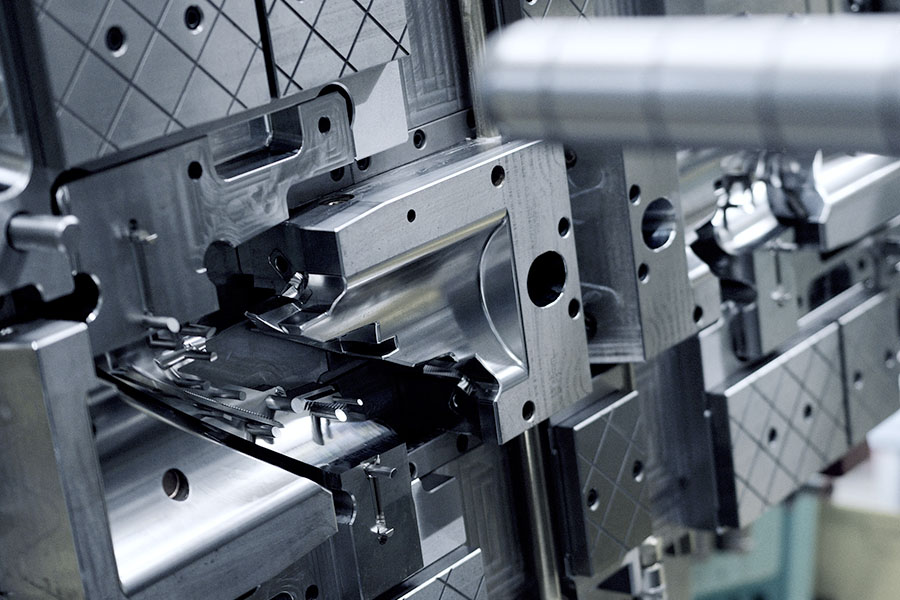
Various components in mould and die
Mould and die offers a wide range of tools and moulds that are tailor-made for customers’ products. The variety ranges from simple forging dies to complex injection moulds. Which tool or mould is chosen depends on many factors. These include the material to be formed and the specific requirements for the end product.
Mould and tool types at a glance
The following table shows various mould and tool types:
| Component type | Area of application | Challenges in production |
|---|---|---|
|
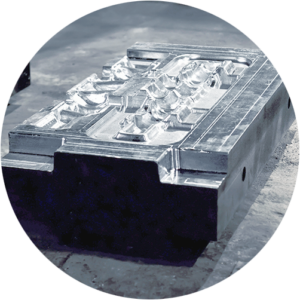
Sheet metal tools
|
Sheet metal forming is the most cost-effective forming process for manufacturing parts in large quantities. Force is applied to the metal to shape it into the desired form. This produces precise metal parts with little waste, e.g. tin cans or car bodies. |
|
|
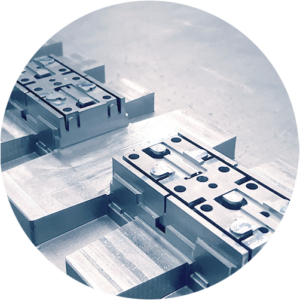
Tools for hot forming
|
In hot forming, metals are moulded at temperatures above the recrystallisation temperature. This process makes it possible to efficiently mould even high-strength materials. It is primarily used to manufacture components that have to withstand high loads, such as crankshafts or gear wheels. |
|
|
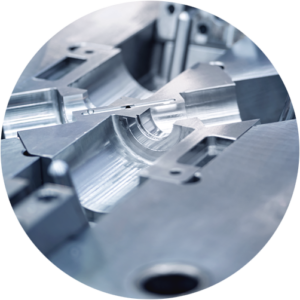
Injection moulding tools
|
Injection moulding is a moulding process in which materials such as plastics are heated, melted and then filled into metal moulds. In this way, objects can be produced with high precision in a short time, and the surface of the component can be selected almost freely. This process is therefore popular for the mass production of consumer goods. |
|
|
Die casting tools
|
Die casting is a process in which alloys with a low melting point are usually melted and then injected into a mould under high pressure and at high speed. The casting is suitable for manufacturing of thin-walled castings with smooth surfaces. |
|
|
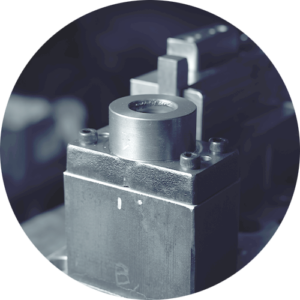
Cold forging tools
|
Cold forging is a forming process in which the base material is not heated. The material is placed in a die and compressed by a press until it fits into the desired mould. This process delivers a particularly high product quality with very tight tolerances, even for large components. |
|
Press moulding vs. injection moulding: What are the differences?
Press moulds and injection moulds are both used to manufacture moulded parts, but they differ significantly. With press moulds, material is pressed into a mould under pressure to form the final product. Injection moulds, on the other hand, use heat and pressure to inject liquid material into the mould cavity.
Cost efficiency in mould making
Efficiency is crucial in modern manufacturing. In mould making, striving for cost efficiency means more than just saving materials and time. It also involves maximising the quality and life of the moulds. Careful planning and design, coupled with the appropriate choice of materials and manufacturing techniques, can reduce costs and increase profitability.
Tips for saving
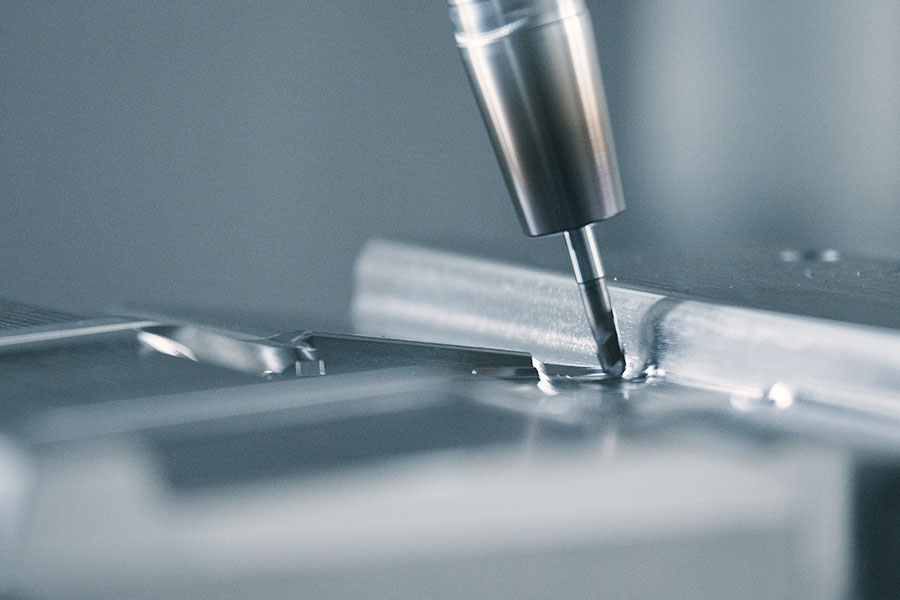
In the field of machining, savings can only be achieved in the long term if mould makers rely on high-quality tool solutions. High-performance tools from Gühring increase their cost efficiency in various ways:
Tip 1
Save on reworking with precise tools:
Our tools can be used to produce components with very high angular and contour accuracy as well as surface qualities. This ensures that the component comes off the machine ready to use.
Tip 2
Reduce machining time with high cutting parameters: Higher cutting parameters result in shorter machining times per component. It is therefore worthwhile to rely on high-performance tools from Gühring, which guarantee high process reliability even at high feed rates.
Tip 3
Fewer tools required thanks to high tool lives:
Reliable tools with long tool lives are crucial for cost-effectiveness. Gühring ensures very long tool lives with specially developed coatings, adapted carbide substrates and stable geometries. For you, this means that your tool requirements and thus also your tool costs are reduced.
Mould making materials
Many different materials are used in mould making. In order to optimise each project, it is important to know their properties and possible applications.
Metals for mould making
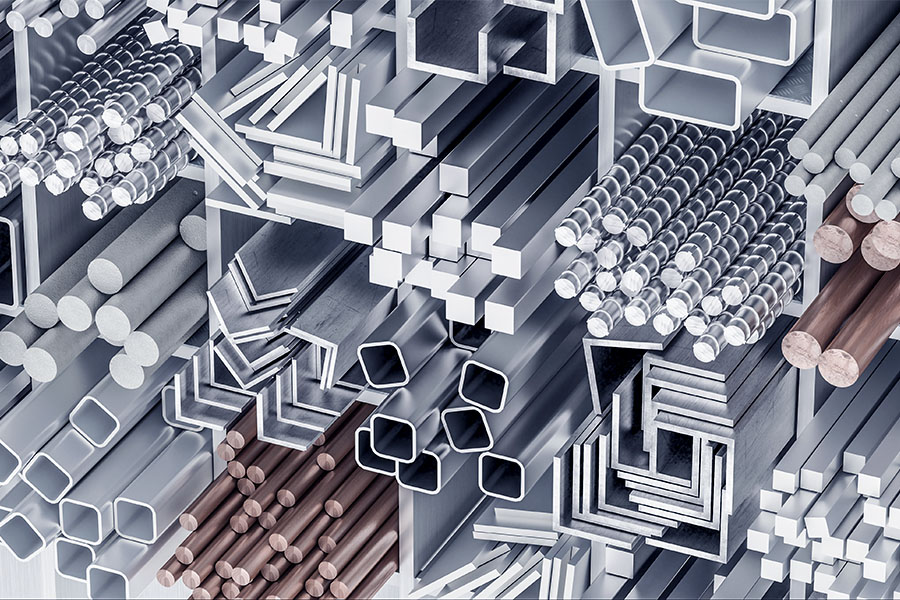
Metals are widely used in the mould making industry. They are characterised by high strength and durability, which makes them essential for the production of durable moulds. Whether steel, aluminium, copper or titanium, the choice of the right metal can greatly influence the quality and efficiency of mould making.
Overview of steel types
Steels of various hardnesses are primarily used as materials for manufacturing moulds and tools. The alloy content in the steel type and any heat treatment must be taken into account.
| Material group | DIN | Strength | Achievable hardness | Material group | Properties | Use |
|---|---|---|---|---|---|---|
| 1.1730 | C 45 U | 640 N/mm² | 58 HRC | tool steel | unalloyed, flame hardenable | unhardened components such as plates & frames for mould structures and column frames |
| 1.2083 | X 40 CR 14 | 720 N/mm² | 53-56 HRC | through-hardening steel | high-alloyed, low corrosion | form inserts and plates for plastics processing, primarily for processing corrosive plastics |
| 1.2085 | X 33 CrS16 | 1080 N/mm² | 48 HRC | tool steel | high-alloyed, prehardened, corrosion resistant, good machinability | plates for corrosion resistant moulding structures and column frames. Moulding for processing corrosive plastics. |
| 1.2162 | 21 MnCr5 | 660 N/mm² | 205 HB | case hardened steel | alloyed | form inserts and machine components |
| 1.2311 | 40 CrMnMo 7 | 1080 N/mm² | 52 HRC | tool steel | alloyed & heat-treated, especially suitable for nitriding, polishable | form inserts, applications, high-strength machine components |
| 1.2312 | 40 CrMnMoS 8-6 | 1080 N/mm² | 52 HRC | tool steel | alloyed & heat-treated, good machinability | Plates for moulded structures and column frames with increased strength requirements |
| 1.2316 | X 38 CrMo16 | 1010 N/mm² | 49 HRC | tool steel | high-alloyed & heat-treated, corrosion resistant, polishable | moulding for the processing of corrosive plastic |
| 1.2343 | X 37 CrMoV 5-1 | 780 N/mm² | 50-56 HRC | hot work steel | high-alloyed | form inserts and mould inserts for plastic injection moulding tools |
| 1.2344 | X 40 CrMoV 5-1 | 780 N/mm² | 54 HRC | hot work steel | high-alloyed, heat resistant, hot wear resistant, very good thermal conductivity | standard material for hot work tools, extrusion tools, dies, tools for plastics processing |
| 1.2379 | X 153 CrMoV 12 | 720 N/mm² | 60-62 HRC | through-hardening steel | high-alloyed, low temperature cold work steel | form inserts and applications as well as pressure and indexable inserts with increased wear resistance |
| 1.2714 | 55 NiCrMoV 7 | 850 N/mm² | 56 HRC | through-hardening steel | good heat resistance and toughness | extrusion tools, hot forging tools, dies for processing tin, lead and zinc alloys |
| 1.2738 | 40 CrMnNiMo 8-6-4 | 1080 N/mm² | 53 HRC | tool steel | heat-treated, with uniform strength at larger dimensions, polishable and nitridable | large form inserts with deep cavities, bumpers, dashboards |
| 1.2738 HH | 40 CrMnNiMo 8-6-4 | 1200 N/mm² | 33-38 HRC | special alloy | tempered plastic mould steel with homogeneous strength | large moulding for injection moulding with special requirements for the working surface (polish finish, grainability) |
| 1.2767 | 45 NiCrMo 16 | 830 N/mm² | 53-58 HRC | through hardening steel | alloyed, polishable, high pressure and flexural strength | sophisticated form inserts and applications; cutting and bending inserts for high pressure loads |
In order to cope with the steadily increasing quantities being produced in them, moulds must become increasingly stable. This has led to a trend in mould and die towards ever harder and more corrosion resistant materials. And in order to machine these, mould makers are dependent on more powerful cutting tools.
Gühring has adapted its substrate to these increased demands: it is now around 200 HV harder and is therefore perfectly suited for machining operations on materials with up to 65 HRC and even high-alloyed or powder metallurgical tool steels.

 Navigator
Manufacturing processes in mould and die
Numerous manufacturing processes are necessary to achieve the quality and precision required in modern mould making. In the following, you will learn about the most important manufacturing processes and their use in mould and die.
Machining processes in mould and die
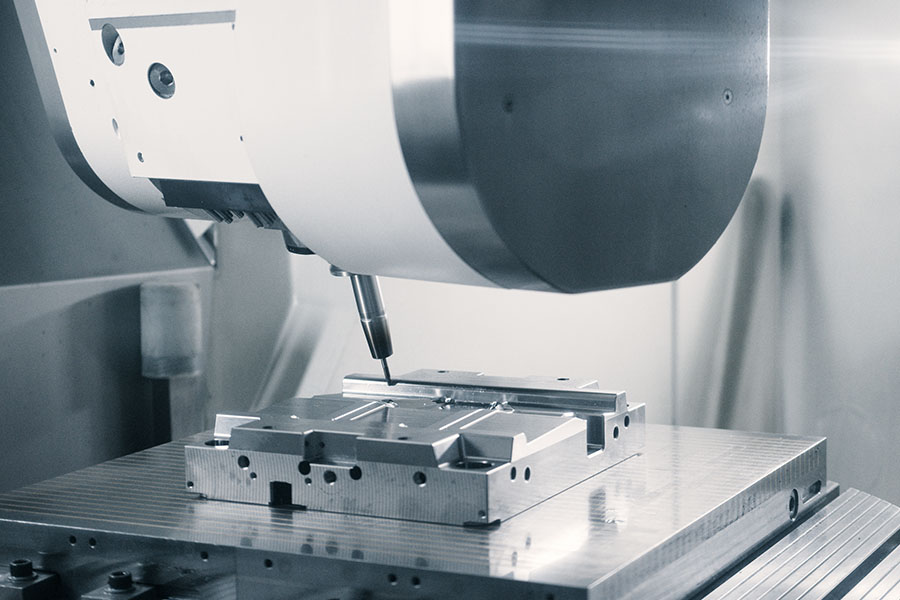
Machining in particular is a key process in mould and die. It includes processes such as milling, drilling and turning, in which metal or plastic is removed by machining to produce the desired shape.
Milling in tool and mould making
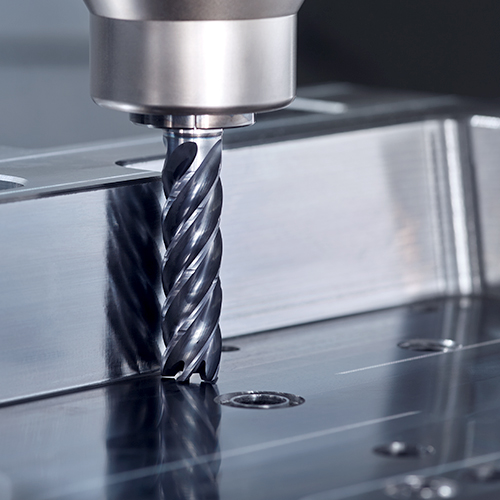
Milling is a frequently used technique in tool and mould making. Both complex shapes and simple, flat surfaces can be produced to a high standard using milling techniques.
Gühring offers its own range of milling cutters specifically for tool and mould making: G-Mold milling cutters are particularly suitable for finishing high-precision fits and guides with exact angular accuracy. A very stable core geometry and an optimised flute profile give the solid carbide milling cutters stability and reduce deflection. The tools also have shank tolerances in the h5 range and are μ-precise in diameter, concentricity and roundness. Thanks to a combination of carbide, coating and geometry, you can achieve a significant increase in performance in tool and mould making with these high-precision milling cutters.
Drilling in mould and die
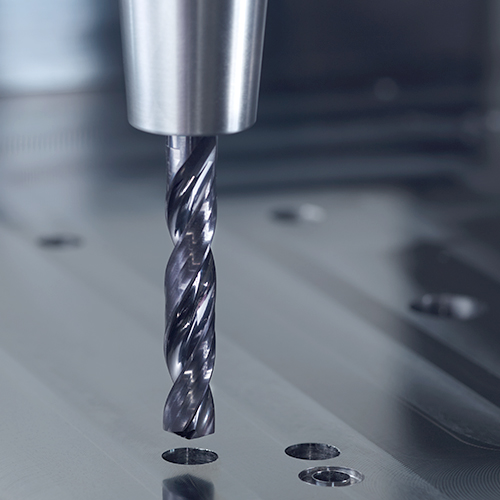
Drilling plays an important role in mould making. Accuracy and precision are crucial when drilling in order to ensure the quality of the end product. The drilling operations in tool and mould making are varied and range from holes for assembly purposes and ejector holes to deep holes for cooling.
With spiral solid carbide drills from Gühring, extremely good cutting parameters and long tool lives can be achieved under stable machining conditions with high process reliability. The tools are designed for hard drilling in materials up to 65 HRC. The comprehensive product range with proven geometries and application-specific coatings ensures precise and economical machining at drilling depths of up to 40xD.
Gühring also offers suitable tool solutions for deep hole drilling in mould and die. For example, single-fluted deep hole drills are used to drill deep coolant duct bores in injection moulding tools, which are used to control the temperature of the mould. With high-quality cutting tools with effective internal cooling from Gühring, these holes can be produced process-reliable and efficiently.
Thread production in mould and die
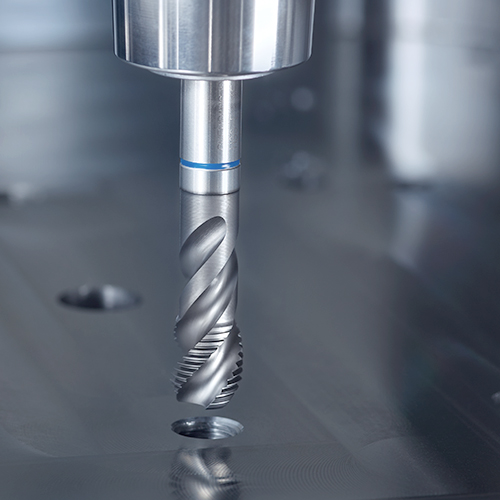
Whether for fastening, transport or functional threads, Gühring always offers the right solution for thread production in mould and die: Gühring thread milling cutters are suitable for both right-hand and left-hand threads and allow different thread tolerances to be produced with just one tool.
In addition to specially designed thread milling cutters for hard machining up to 66 HRC, the programme also includes tools for universal use. Gühring’s solid carbide thread taps are also suitable for machining hardened steels between 55 and 62 HRC due to their negative rake angle. And if you want to combine core hole and thread production in one tool, you can use Gühring’s helical drill thread milling cutter.
Reaming and countersinking tools for mould making
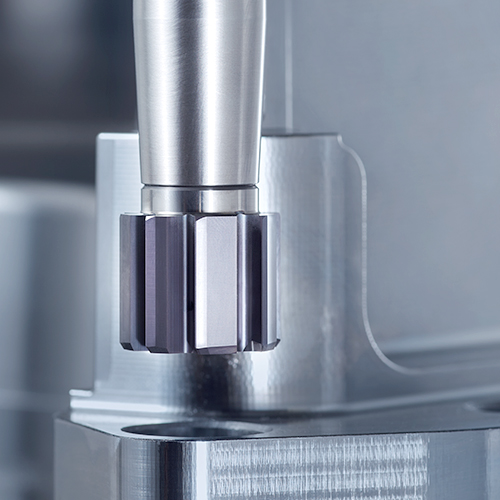
Reaming and countersinking tools are often used in mould making. With Gühring reamers, you can produce fitting holes with the best surface qualities and form and position tolerances.
The Gühring mould making range includes reamers for a wide variety of requirements. With our high-performance reamers, you can produce H7 fits or 0.01 oversizes with perfect surfaces in both high-strength and hardened tool steels. The reamers are time-saving and process reliable and, thanks to their internal cooling, ensure maximum cutting data and perfect chip removal in blind and through-holes. The NC machine reamers enable universal reaming in tool steels and many other materials. They can be used on NC and conventional machines without internal cooling.
Clamping system for mould making
Correct tool clamping is crucial for the quality of the end product. Clamping systems therefore play a central role in mould making.
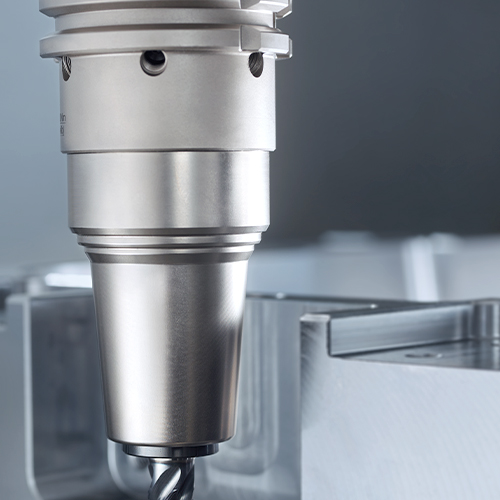
Gühring has expanded its proven clamping system GM 300 specifically for mould and die and now offers a selection of optimised shrink fit chucks, hydraulic chucks and precision collet chuck holders.
The shrink fit chucks and hydraulic chucks feature an optimised interference contour and increased rigidity. Despite their slim design, the tool holders ensure maximum stability and concentricity, even in long overhanging clamping situations.
Shrink fit chucks in the online shop
Hydro expansion chucks in the online shop
More processes in mould and die
Erosive machining in mould and die
Erosive processes are indispensable for modern mould and die. They include processes such as wire and die-sinking EDM. These techniques enable the production of extremely precise shapes and surfaces.
Wire EDM in mould and die: how it works and areas of application
Wire EDM uses electrical sparks to remove material. This method is ideal for producing complex shapes and delicate structures that conventional machining techniques often cannot produce.
Die-sinking EDM in mould and die
The sinking, often referred to as die sinking or start hole eroding, is used to produce start holes or complex cavities. It is an importat manufacturing technique for mould makers who work with difficult-to-machine materials such as hardened steel or carbide.
For cost reasons, however, more and more mould makers are trying to replace the time-consuming process step of die-sinking with direct milling processes. This results in a constant endeavour to machine ever deeper cavities with ever smaller tool diameters. Gühring provides the solution with the new G-Mold μ micro tools. The solid carbide-micro-precision tools feature GÜHROJET peripheral cooling, an innovative cooling strategy in which the coolant ducts are integrated into the reinforced shank of the micro-precision milling cutter and positioned very close to the cutting diameter. The result is a targeted, precise cooling that ensures reliable chip removal even in narrow flutes.
Grinding in mould and die
Grinding is another key process in mould and die. It helps achieve high-quality surfaces and create sharp edges.
However, efforts are also being made here to eliminate the grinding process step by using high-gloss finishing milling to create perfect surfaces during machining. The μ-precise finishing end mills from Gühring’s G-Mold-programme offer this possibility by ensuring perfect surface qualities.
Additive manufacturing: 3D printers for mould making
Additive manufacturing, also known as 3D printing, is a groundbreaking technology. It fundamentally changes mould and die, as it can create complex shapes directly from a CAD model. 3D printing therefore opens up new ways of designing and manufacturing components.
However, when components are produced using additive processes, a finishing process with milling tools is often required afterwards. Gühring supplies the right tools for this with its G-Mold μ programme.
Application examples mould making
This is where our tools come into play
Whether automotive industry, consumer goods industry or packaging industry: tools and moulds are needed in many sectors. For example, various Gühring tools are used in the production of a core retainer plate made of 1.2312 (40CrMnMoS8-6) with a tensile strength of 950 to 1100 N/mm². Click on the corresponding fields on the component to display the appropriate tool for this application.
Note: This is not a real machining operation but a fictitious example. For specific tool recommendations for your machining operation, please contact your tool sales team. The surfaces are coloured according to the VDWF colour chart. This allows you to see the tolerance with which the surfaces must be machined and how the threads must be produced.
How is mould making used in the automotive industry?
Moulds play a crucial role in the automotive sector. In addition to engine components, they also produce parts that are required regardless of the car’s drive concept: parts for the bodywork or interior fittings are just as necessary for electric cars as they are for combustion engines. High production rates and strict quality standards dominate mould making in the automotive industry.
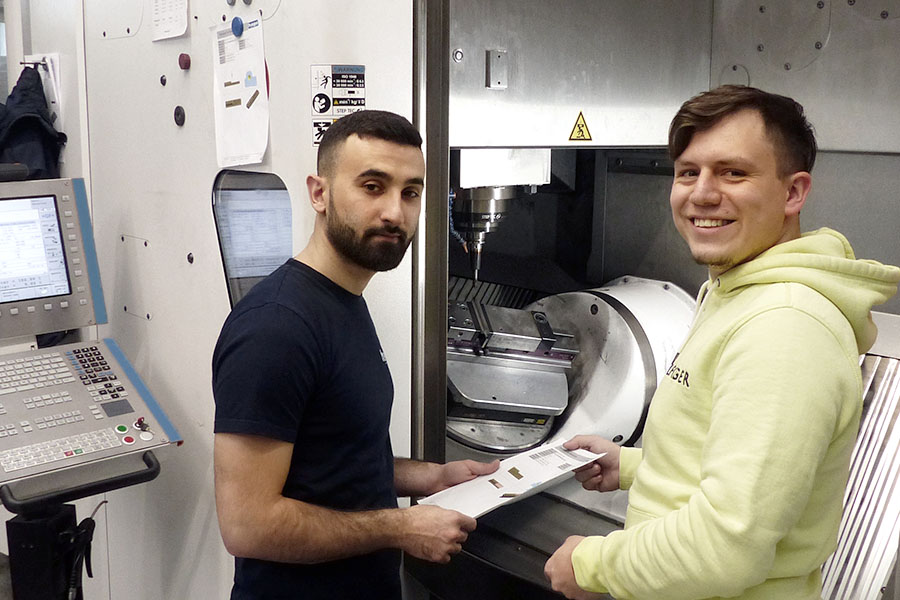
Four times more threads when hard milling punching tools
Hago Feinwerktechnik GmbH, based in Küssaberg (Waldshut district), manufactures sheet metal parts for the automotive industry using punching technology. These tools for punching sheet metal have to withstand a lot. That is why Hago Feinwerktechnik GmbH uses materials with a hardness of up to 66 HRC in its own toolmaking department. In order to cut threads and contours into these materials, the company relies on process-reliable cutting tools. Two Gühring tools not only impress with their low wear, but also with considerable cost savings – a real competitive advantage for Hago.
The role of mould making in the consumer goods industry
In the consumer goods industry, products are often manufactured in large quantities. Mould making is responsible for creating high-precision, durable moulds that are used in mass production. These moulds can produce thousands or even millions of units, enabling efficient manufacturing.
You are currently viewing a placeholder content from YouTube. To access the actual content, click the button below. Please note that doing so will share data with third-party providers.
More InformationReliable tools for the manufacturing of injection moulds
Decades of expertise, skilled employees and state-of-the-art machines – these are the foundations on which precision mould maker Color Metal bases its injection moulding tool manufacturing. These tools are later used to manufacture a wide variety of products, such as household items. Manufacturing takes place in the 5-axis range – from pre-milling to cooling hole drilling and hard milling. Equipment is automated and runs 24/7. This is why it is particularly important in the milling sector that the company can rely on high-quality Gühring tools with consistently long tool lives.
How mould making improves the manufacture of medical devices
Moulding is indispensable in the medical sector. It is used to manufacture devices and components that often have to meet strict standards. High-precision moulding produces devices that save lives and improve the health of millions of people worldwide.
How mould making is revolutionising packaging production
Moulding is indispensable in the manufacture of containers, bottles, lids and many other products in the packaging industry. They make the process more efficient and cost-effective. They also offer great flexibility in the design and functionality of the packaging.
CAD design
CAD design and modelling for mould making
Modern technologies have had a major impact on mould and die. CAD (Computer-Aided Design) and CAM (Computer-Aided Manufacturing) are leading the way in this field. They offer a level of precision, speed and flexibility that was previously unattainable. But one thing is certain: without reliable tools, you will never be able to fully exploit the potential of CAM programming.
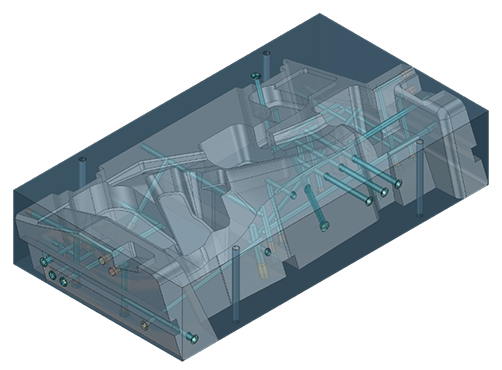
What is CAD/CAM?
Computer-Aided Design (CAD) & Computer-Aided Manufacturing (CAM) allow mould makers to simulate different manufacturing processes. This is particularly valuable in mould making, where production is often complex and time-consuming. With the help of CAD software, mould makers can construct accurate 3D models of moulds and tools and program them with CAM software. This creates a digital twin of the future component, which is used to simulate production processes, calculate material requirements and generate detailed production plans.
Would you like to simulate your machining or manage your tools using drawings? We provide you with standard-compliant CAD data and 3D models for free in our online shop or in the CAD portal.
Optimisation of moulds with CAD-software
By using CAD in design, mould makers can identify and resolve problems before production begins. In this way, CAD software increases product quality and the efficiency of the entire production process.
However, the increasing digitalisation of production also means that cutting tools must meet very tight tolerances and constant tool life requirements. Gühring has therefore developed a range of milling cutters for high-precision requirements in mould and die. With their μ-precise radius accuracy and concentricity, these milling cutters ensure reproducible form accuracy of the components.
CAD portalMould maintenance and repair
Every moulding tool is subject to wear and tear over time, regardless of its quality or design. For this reason, mould maintenance and repair play an important role in mould making in order to ensure their life and level of performance.
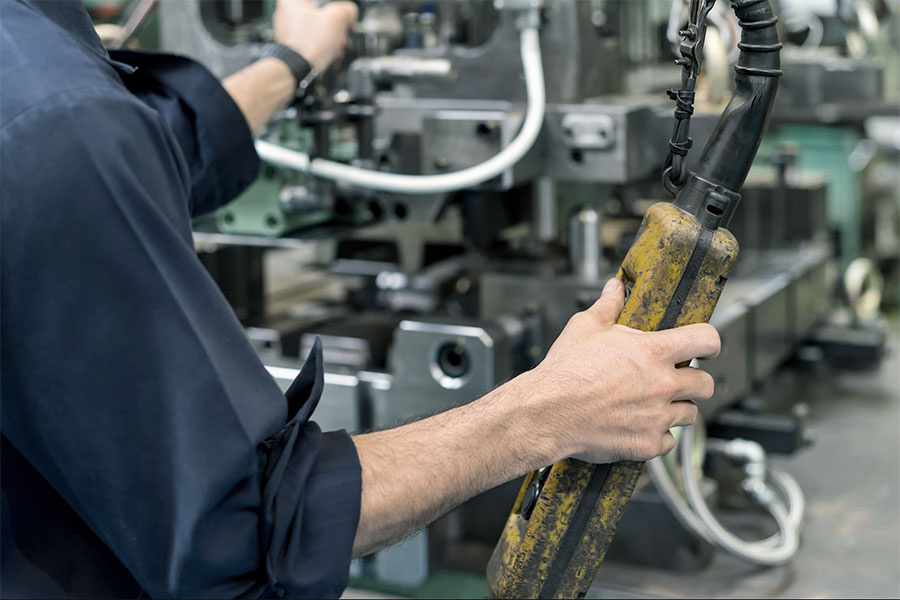
In forging die construction and aluminium die casting in particular, it is often necessary to add material to moulds or weld them. This also involves machining processes, e.g. when a thread needs to be added to an already hardened moulded part in order to optimise the mould. This calls for high-performance tools for hard machining, which use high cutting parameters to keep repairs as short as possible and minimise downtime. Gühring offers a wide range of tools that are particularly well suited for hard machining in mould and die. An ultra-hard carbide substrate is used for this purpose, which ensures excellent edge stability and thus process-reliable tool life. In this way, materials with hardnesses up to 65 HRC can be machined process-reliable.
How can the life of injection moulds be extended through refurbishment?
Refurbishment serves to extend the life of moulds, especially injection moulds. This process involves inspecting, cleaning and repairing a mould as necessary to ensure continuous, efficient operation. Regular refurbishment cycles prevent minor problems from causing major failures and significantly extend the life of the moulds.
The future of mould making
The future of mould making is exciting. Digitalisation, new materials and manufacturing methods, and increased automation are continuing to revolutionise this field. The growing field of additive manufacturing in particular has the potential to transform traditional mould making.
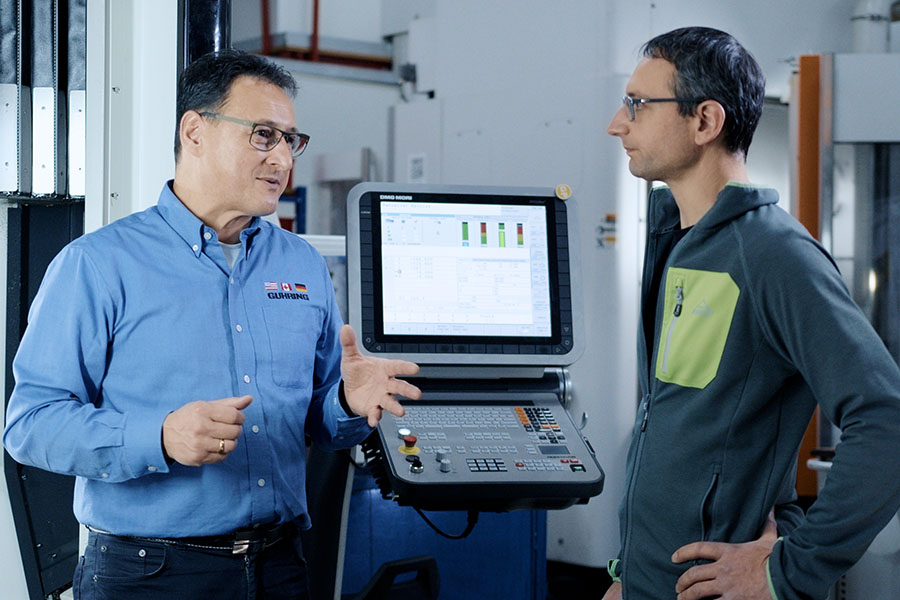
How to benefit from Industry 4.0 in mould making
The fourth industrial revolution, also known as Industry 4.0, is introducing new technologies to mould making. Artificial intelligence, machine learning and the Internet of Things are being utilised. They enable faster, more accurate and more cost-efficient mould production.
Gühring is also making the vision of digitalised production a reality with its ‘Gühring Tool Management Software’ (GTMS). This software not only handles intelligent tool management, but also controls and automates many other processes in companies. In addition, it can be used to optimise workflows and manufacturing processes through continuous analysis of process data.

Aviation
On the rise in aircraft construction with Gühring
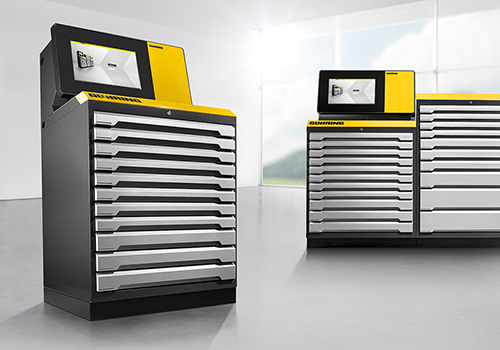
tool dispensing systems
Hardware for your tool management
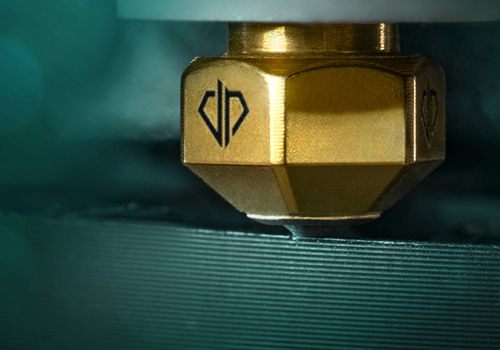
Additive manufacturing
Set new milestones in 3D printing


