



Reaming tools
A well-rounded affair
Gühring offers a wide range of innovative reaming tools and reamers for every diameter range. Rely on high-performance reamers made of carbide or Cermet for precise reaming and increase the quality of your products with our reaming tools.
Reaming tools in the online shop
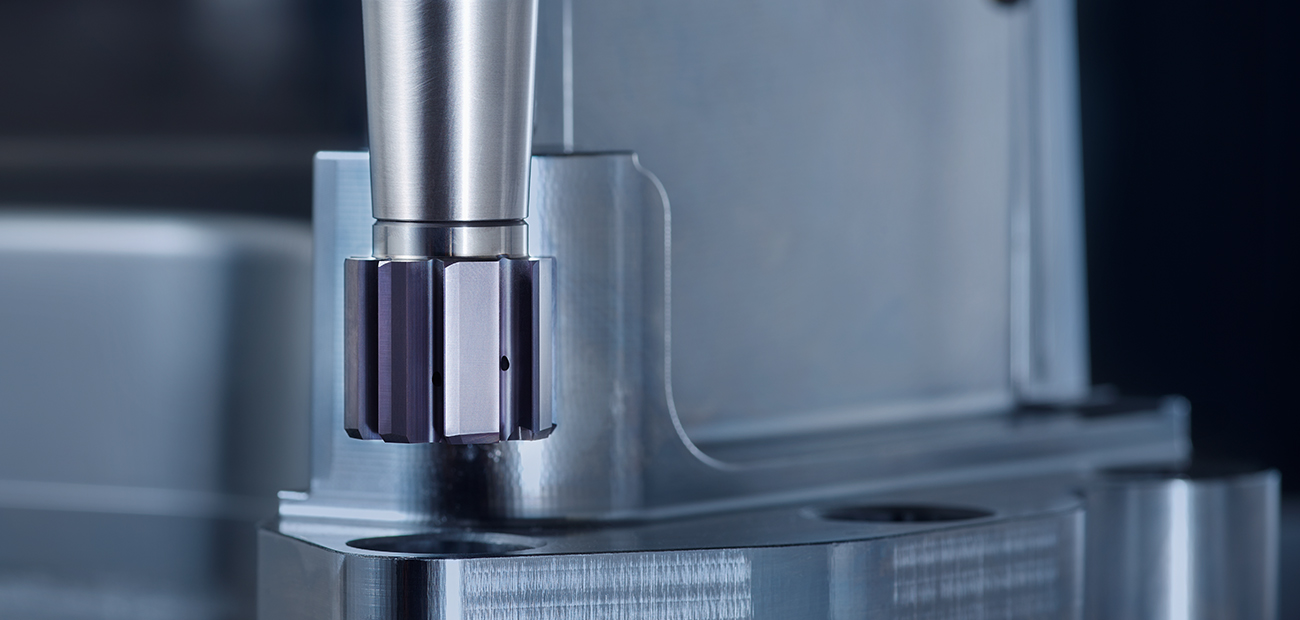
Introduction to reaming
What are reamers?
A hole that is only generated with a drill is too imprecise for some purposes. For example, bearing seats often have to be manufactured very precisely, which is why a reamer is used here. Reaming is a finishing operation that is carried out with a multi-fluted tool.
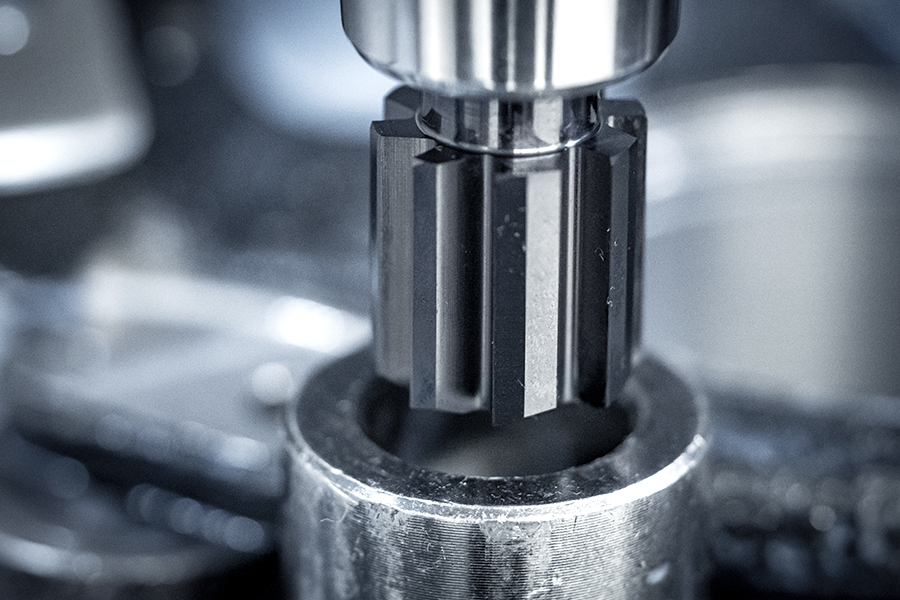
The reamer produces high surface qualities, excellent hole qualities and tight diameter tolerances at high feed and cutting speeds with low cutting depths. This produces a hole with an accuracy of IT7 and better in accordance with ISO tolerance. These holes are used in metalworking, for example in products such as bearing seats, dowel pins and guides. They can be used on both pillar drill machines and modern CNC machines.
Structure and functionality of a reamer
The reamer has a shank that is clamped into the clamping chuck. The shank tapers into a section known as the neck. The guide part of a reamer ensures that the tool does not deviate or wobble during the machining. The reamer has a bevelled section at the end face, known as the chamfer lead. The cutting tools only cut at this chamfer lead, usually producing very small and compact chips. The round grinding chamfer smoothes the surface on the reaming.
Different reamer shapes
Reamers are categorised into three different types: shape A, B and C. These terms refer to the design of the cutting edges or the design of the cutting head of the reamer. Each of these shapes is tailored to specific applications and workpieces in order to achieve the best result during machining. The different shapes influence the way in which the reamer removes material and how it is used.
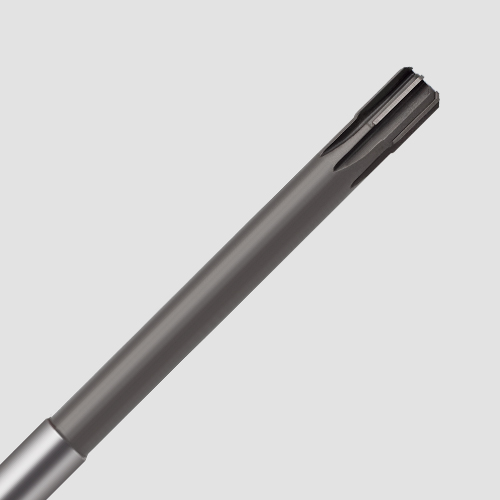
Reamer shape A
Reamers with the shape A are straight-fluted and are used for the machining of blind holes. The small chips collect in the flutes. In reamers with internal cooling, these are flushed out.
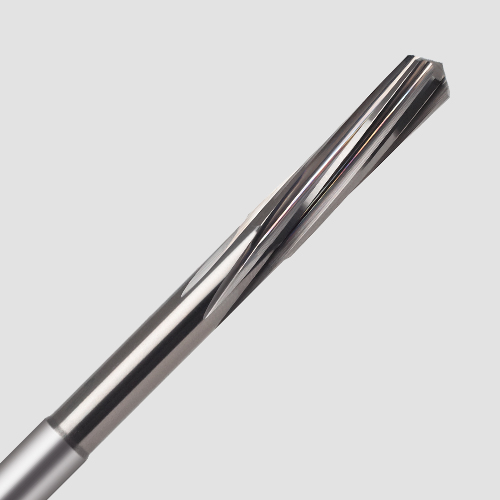
Reamer shape B
Reamers with the shape B are twisted on the left. This usually pushes the chips out of the hole in the feed direction. The tools are suitable for machining through-holes.
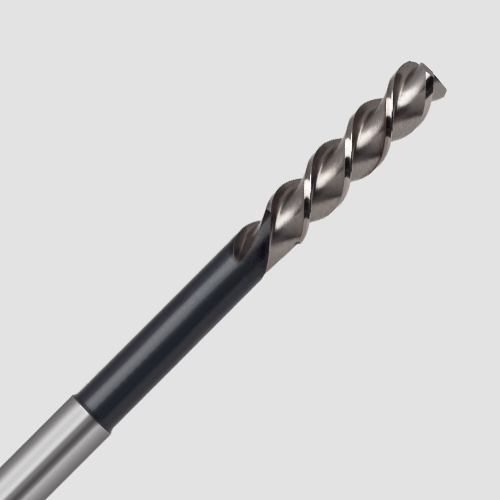
Reamer shape C
The C-shaped quick helix reamer has a long, flat chamfer lead and is therefore only suitable for machining through-holes. Quick helix reamers can machine holes with higher stock removal levels as well as interrupted cutting and cross holes.
History & development of the reaming tools
The history and development of the reamers go back a long way and are closely linked to the history of metalworking and the need for precise holes.
From blacksmithing to industrialisation
Blacksmiths began making reaming tools from metal as early as the Middle Ages. In the 18th and 19th centuries, the industrial revolution brought significant advances in tool manufacturing. Machines were used to produce more precise and efficient reamers.
Spiral flute reamers improve chip removal
In the middle of the 19th century, spiral groove reamers were developed. This special shape of the reamers with spiral cutting edges improved the chip removal and contributed to the better surface quality of the products.
HSS and solid carbide: improved performance thanks to new tool materials
The introduction of high-speed steel (HSS) at the beginning of the 20th century significantly improved the cutting performance of reaming tools. In the 1930s, carbide was introduced as a cutting material for cutting tools, making reamers even harder and more powerful.
Gühring invents modern coating
In 1981, Gühring developed the first coated cutting tool – a milestone for metalworking. Since then, the coating has played an enormous role, especially in reamers, extending the tool lives.
Reaming on a new level: CNC machines and high-performance reamers
With the spread of CNC machines in recent decades, the precision of reaming has continued to improve. A CNC-controlled high-performance reamer such as the HR 500 from Gühring enables highly precise and automated reaming.

 Academy
Fundamentals of reaming tools
Overview of reamer types
The reamer is the most common tool for producing toleranced and highly accurate holes with high surface quality. Here, you can find out everything you need to know about the important finishing process.
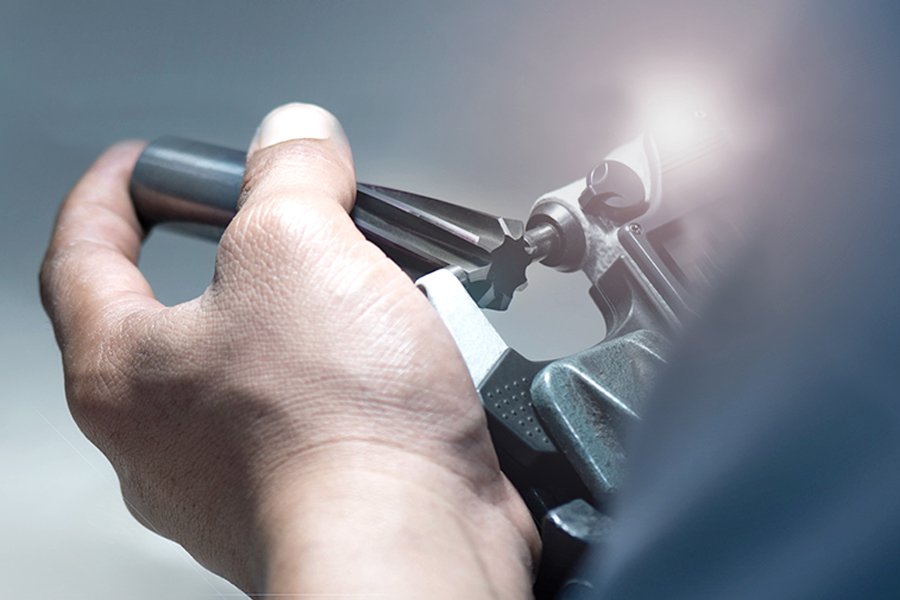
What types of reamers are there?
Choosing the right reamer depends on several factors, including the material and the specific requirements of the finished products, so there are different types of reamers designed for different applications and materials. Here are some of the most common types:
- hand reamers
- machine reamers
- adjustable reamers
- taper reamers
- quick helix reamers
- high-performance reamers
Manual reamer
Flexibility in the manual reworking
With a hand reamer, guidance and feed are carried out ‘by hand’, which means that the cutting data tends to be low. A hand reamer is usually made of HSS. For better guidance in the hole, the hand reamer has a long chamfer lead. There is also a driving square at the shank end, which is used to clamp the tool into a tap wrench.
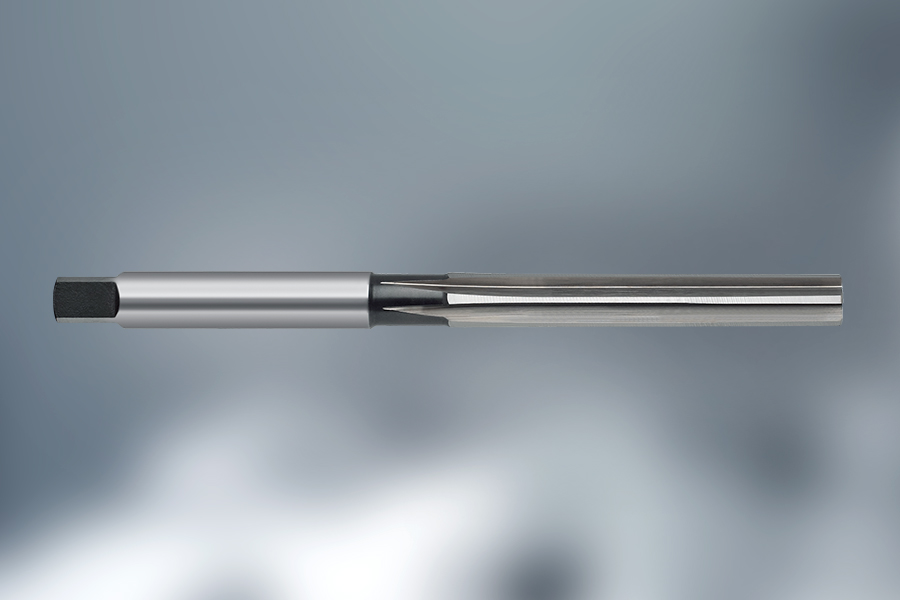
Advantages and areas of application of manual reamers
The manual reamer is often used by craftsmen for reaming. The cutting tools are usually clamped in a chuck or other hand held tool. Compared to a machine reamer, the hand reamer offers more flexibility and manual control when adapting to different requirements.
Machine reamer
Industry standard for machining
Machine reamers are precise and enable automated machining. They usually have a morse taper at the shank end for clamping in a chuck or collet. Due to potentially higher cutting data, machine reamers are available in HSS-E or solid carbide or in a carbide-tipped design.
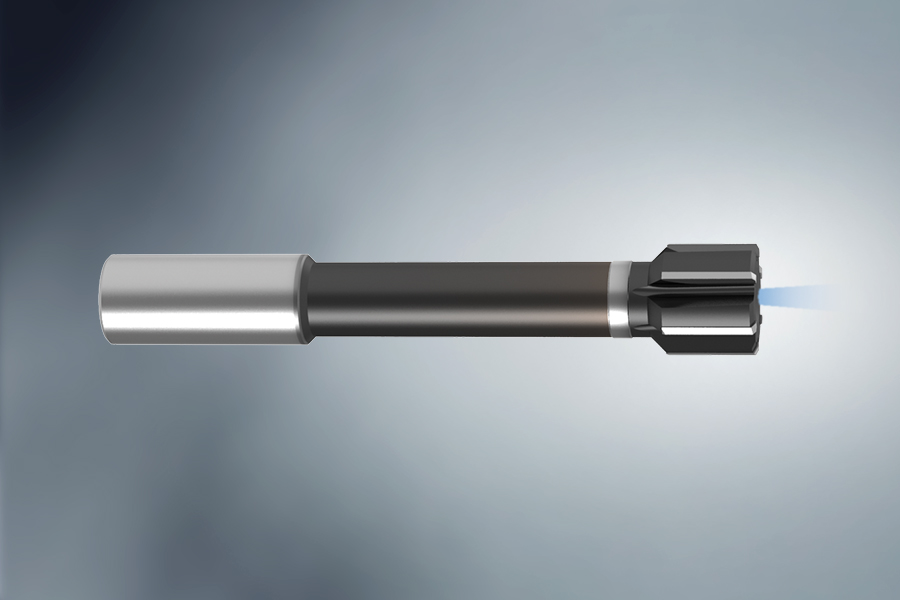
Features and areas of application of machine reamers
Machine reamers have a shorter chamfer lead than hand reamers, as they guide themselves through the hole thanks to their guide part. As the name suggests, machine reamers are designed exclusively for use on machines. They are therefore primarily used in the industrial machining of precision holes in metal. The availability of straight shank and Morse taper versions opens up a wide range of applications, from pillar drill machines to CNC machining centres.
What are the advantages of reamers with straight shanks over others?
Machine reamers are available in designs with morse tapers and straight shanks. The main advantage of the straight shank is that it clamps more evenly in the clamping chuck, ensuring high concentricity during reaming.
Adjustable reamer
Customisable for versatile tasks
These reamers have an adjustable cutting section that allows the diameter of the reamer to be adjusted during machining operations using a nut, usually to an accuracy of 0.01 mm. This means that this type of reamer can be used for different diameters and applications without requiring a separate reamer for each specific diameter.
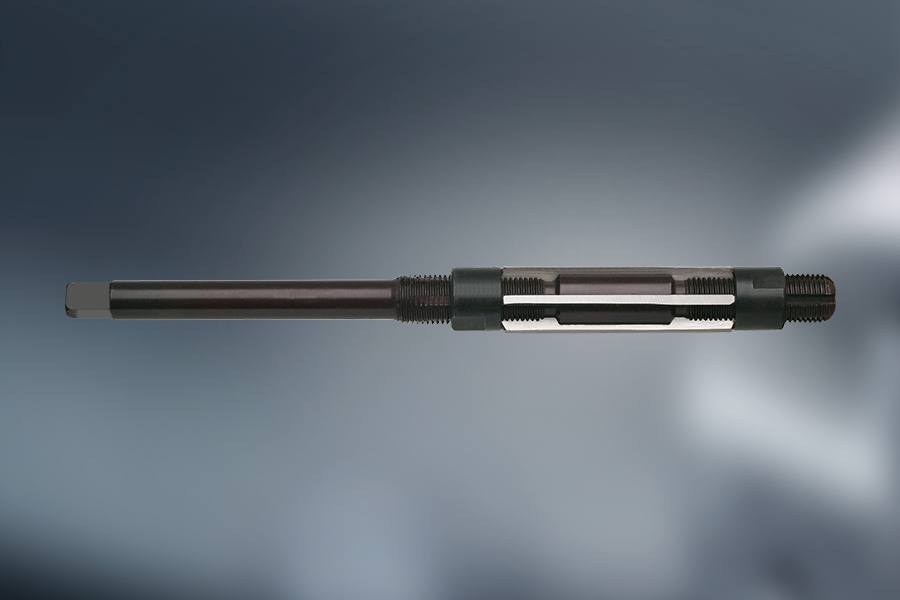
What are adjustable reamers good for and how do they work?
Adjustable reamers are particularly useful when precise adjustments to the diameter are required. The adjustable reamers are therefore mainly used for assembly and repair work. The built-in adjustment mechanism of the reamer usually works by turning a screw, which expands or narrows the cutting edges of the tool.
Taper reamer
Precise reaming with conical perfection
A tapered reamer was developed specifically for reaming tapered holes. The name derives from the characteristic taper attached to the end of the tool, which enables precise centring and adaptation to tapered holes.
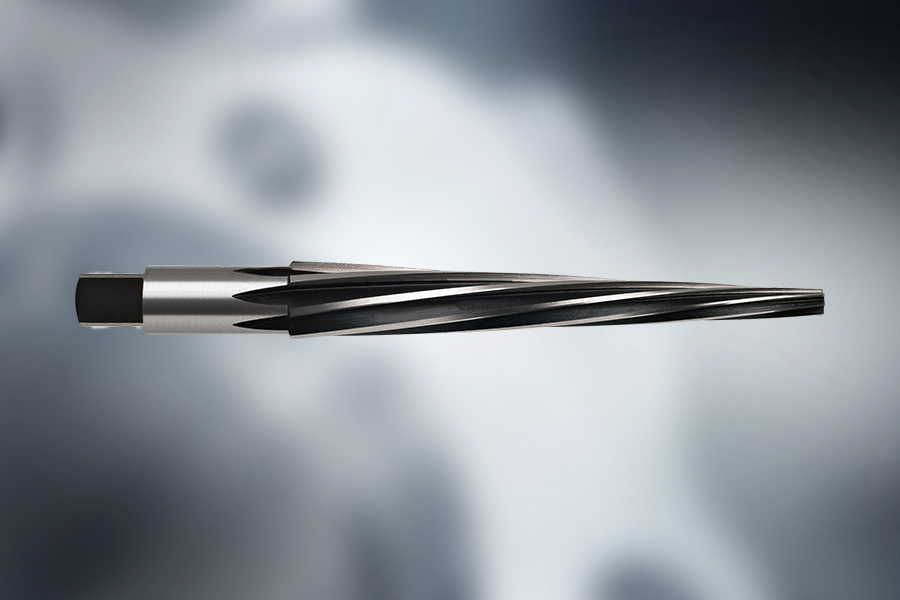
How does a tapered reamer differ from other types?
The main difference between a taper reamer and other types lies in its ability to produce tapered holes, thanks to the characteristic taper at the end of the tool. This is particularly useful in applications where special tapered connections are required, such as tool holders or clamping fixtures. Cylindrical reamers, on the other hand, produce holes with a constant diameter.
Face reamer
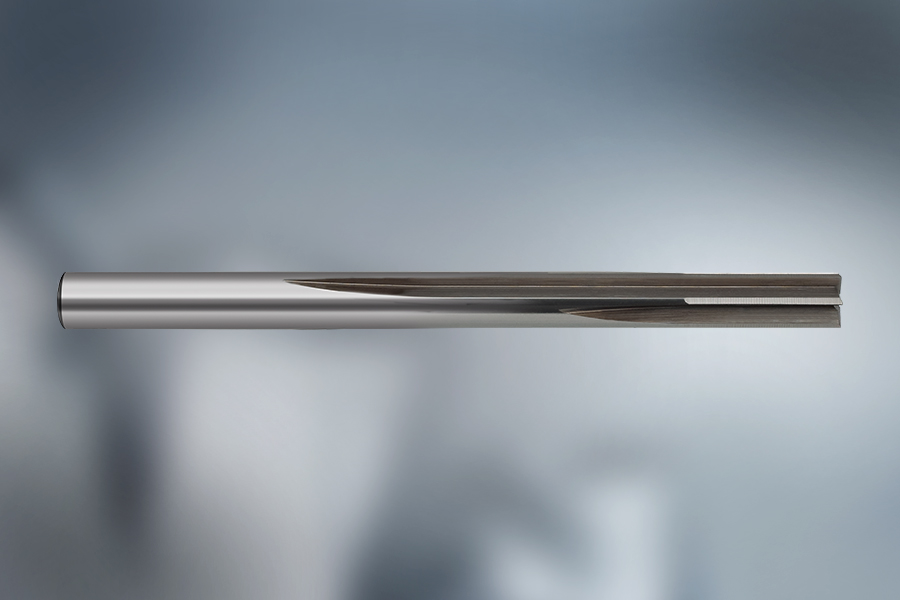
The geometry for perfect end faces
A face reamer is a reamer with a cutting face. The special chamfer lead of the face reamer ensures that it does not necessarily follow the pre-drilled hole, but instead guides itself. This means that even the most demanding requirements for the alignment accuracy of consecutive holes can be met with a face reamer. Furthermore, the cutting face can also be used for machining the bottom of the hole.
High-performance reamer
You are currently viewing a placeholder content from YouTube. To access the actual content, click the button below. Please note that doing so will share data with third-party providers.
More InformationProcess reliability through cutting speed
A high-performance reamer enables particularly efficient machining at higher cutting speeds and feed rates thanks to its high-quality cutting material, special coating and particularly precise geometry. High-performance reamers are often used in areas of industrial metalworking where high precision and production speeds are required.
 Newsroom
Highlights
High performance reamers
High performance reamer
HR 500
Perfect reaming in all diameters
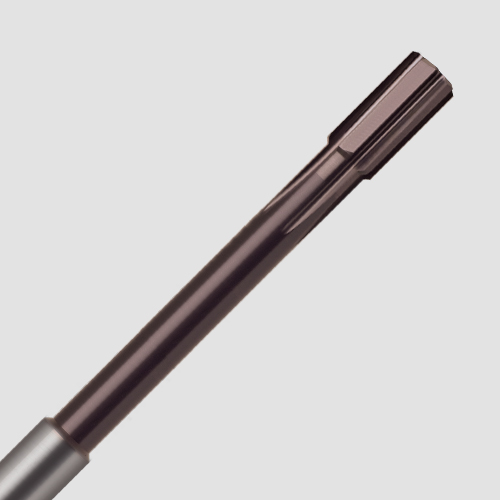
With the HR 500 high-performance reamer, you will find the ideal tool solution for all diameter from 1.95 to 150 mm. A range of HR 500 reaming tools is available to ensure that you always have the optimum HR 500 high-performance reamer for the job.
Your benefits with the HR 500:
- extremely uneven distribution of cutting edges for better quality
- perfect for every fit thanks to diameter increments of ±0.005
- innovative cooling technology for significantly higher performance
Reamers in the application
Reaming is all about producing surfaces and fits with maximum tolerance and a small µ tolerance. There are a few things to bear in mind in order to master this task. Here you will find tips and expert knowledge on the use and maintenance of your reaming tools.
Safety & efficiency in handling reamers
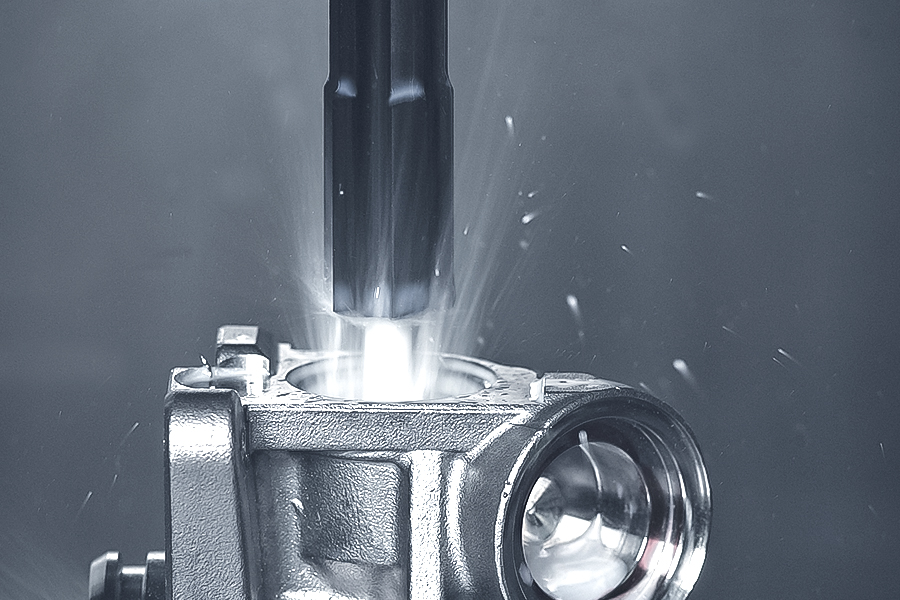
The safe and efficient use of reaming tools in metalworking is crucial for preventing workplace accidents and manufacturing high-quality products. Above all, an appropriate cutting speed, correctly selected feed rate and good cooling are paramount when reaming. You can find the optimum feed rate and cutting speed values for your machining operation in our Gühring Navigator.
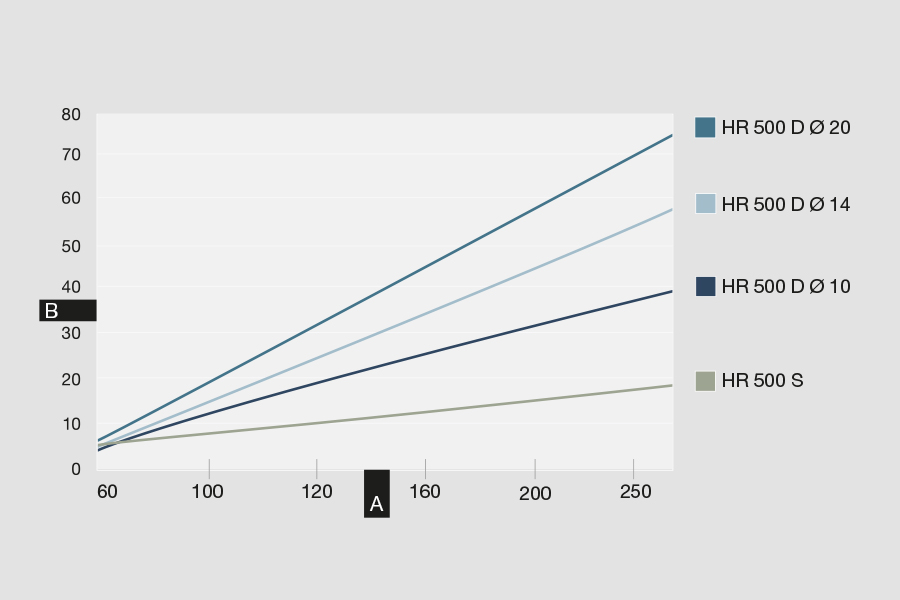
The main task of the cooling lubricant is to deliver the coolant directly to the cutting zone in order to achieve a longer tool life and good chip removal. Increased cooling lubricant pressure can have a positive effect on chip control and chip breaking. General guidelines for the respective coolant pressure can be found in the adjacent graphic.
*Note: guide values for the coolant pressure depending on the cutting speed, valid for standard structural dimensions. Sufficient volume capacity of the coolant pump assumed.
 Navigator
Table for precision work
Optimal pre-drilling for reamers
In preparation for reaming, pre-drilling and, as a rule, core drilling is required. The reamer always follows the pre-drilled hole, so it does not eliminate misalignment errors. Correct pre-drilled holes are therefore essential. The pre-machining diameter is selected depending on the desired diameter and the hardness of the material to be machined. You can find the correct pre-machining diameter in this table:
| Recommended undersizes in mm | up to Ø 6 | up to Ø 10 | up to Ø 16 | up to Ø 25 | up to Ø 40 | over Ø 40 | ||
|---|---|---|---|---|---|---|---|---|
| All materials | Ø 0.1 – 0.2 | Ø 0.2 | Ø 0.2 – 0.3 | Ø 0.3 | Ø 0.3 – 0.4 | Ø 0.4 – 0.5 | ||
| Hardened steel | H | up to 48 HRC | Ø 0.1 – 0.2 | Ø 0.2 | Ø 0.2 | Ø 0.2 | Ø 0.3 | Ø 0.3 |
| Hardened steel | H | up to 63 HRC | Ø 0.1 | Ø 0.1 | Ø 0.1 – 0.2 | Ø 0.2 | Ø 0.2 | Ø 0.2 |
Step-by-step guide to using reamers
- Making the pre-drilled hole: The drilling position and the drilling path should already be optimised during the drilling process. The core hole must have an undersize of 0.1 – 0.2 mm before reaming.
- Deburring the hole: Deburring the hole is useful for better centring of the reamer and for the chip formation, but is not absolutely necessary. A countersink should be used here with an allowance of 0.2 mm.
- Setting the correct speed: The following formula helps to calculate the speed:
n = Vc/(π*d*2)
n = speed; Vc = cutting speed; π = 3.14; d = hole diameter - Reaming: The actual reaming follows as fine machining, using reamers.
- Check the result: after the reaming, the hole is checked with a limit plug gauge.
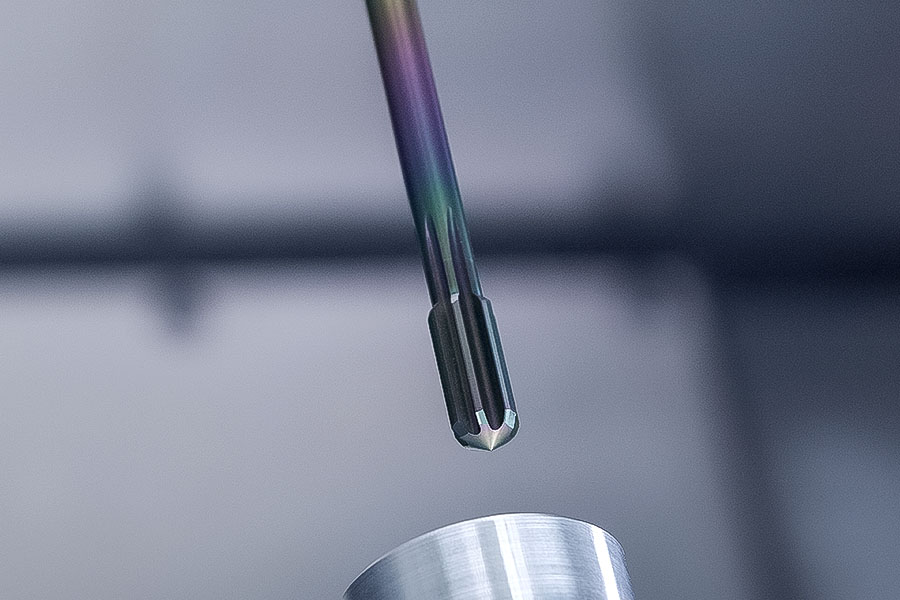
Tips for precise results during reaming
Tip 1: correct tool selection
When deciding whether to use a spiral-fluted or twist-fluted reamer, there are several factors to consider:
- Material properties: Spiral fluted reamers are ideal for softer materials such as aluminium. The spiral flutes promote efficient chip removal, minimise friction and prevent the flutes from clogging, which is particularly advantageous for deep holes. Twist reamers are better suited for harder materials. The diagonal slotting distributes the cutting forces evenly, resulting in more stable and smoother machining operations and higher surface quality.
- Depth and precision to be machined: Deep holes benefit from the improved chip removal of spiral fluted reamers, while twist-fluted reamers deliver more precise results at any depth due to their continuous cutting force distribution.
Tip 2: suitable cutting data
Select the optimum reaming tool type for the application with the optimum cutting speeds and feed rates.
Tip 3: sufficient stock removal
To achieve the best possible results, the reaming tools used must be made to ‘work’. A common mistake is to produce pilot holes with too little stock removal allowance. If there is too little stock removal left in the hole before reaming, the reaming tool cannot cut properly. This causes it to wear out quickly and lose its diameter. It is just as important for good machining performance not to leave too much material in the hole.
Tip 4: secure clamping
The workpiece must be securely clamped and the machine spindle must not have any play. Make sure you use a high-quality clamping chuck. If the reaming tool slips in the chuck, the tool may break, especially with an automatic feed. Limit the projection length of the tool from the machine spindle to a minimum.
Tip 5: optimum cooling lubricant
Only use recommended cooling lubricants to increase the tool lives and ensure that the cooling lubricant reaches the cutting edges. As the reaming is not a heavy machining, an oil emulsion is normally sufficient. For the dry machining of grey cast iron, compressed air can be used if necessary.
Troubleshooting
How to solve typical problems when reaming
If the desired result is not achieved with reaming, there can be many reasons for this. Some typical errors and their causes are described below.
| Problem | Possible cause | Possible solution |
|---|---|---|
| Hole is too big after reaming |
|
|
| Hole is too small after reaming |
|
|
| Surface is bad |
|
|
| Hole with circularity errors |
|
|
| Tapered hole |
|
|
| Incorrect gauge |
|
|
| Chatter marks in the hole |
|
|
| Reamer jams and breaks |
|
|
| Feed letters in the hole |
|
|
Innovative applications of reamers
At Gühring, we are constantly working on developing new, innovative tools that our customers can use to optimise and shorten their processes. One approach to this can be to combine several working steps into one or to save the time-consuming manual reworking. Our deburring reamer EWR 500 achieves both.
You are currently viewing a placeholder content from YouTube. To access the actual content, click the button below. Please note that doing so will share data with third-party providers.
More InformationDeburring reamer for cross holes
When deburring with conventional reamers, the burr between tool and hole wall is often only pushed aside. This compromises the machining result. The deburring of cross holes in particular is often a time-consuming and cost-intensive work step that has to be carried out manually. This is where the deburring reamer EWR 500 finds its application. The gap between the reamer and hole wall is closed by applying cooling pressure and the burr is cut off cleanly at the root.
Care & maintenance of reaming tools
The care and maintenance of reaming tools requires regular measures to ensure efficient and precise machining. We have summarised everything you should consider when caring for your reaming tools here.
Correct cleaning and storage of reamers
Reamers are precision tools and are very sensitive to impact. They should therefore always be stored and transported individually in our sleeves. Tools treated this way will reward you with good reaming results and a longer tool life.
How often do machine reamers need to be serviced?
Reamers should be cleaned, lubricated and inspected regularly to ensure optimal performance. Resharpening of the cutting edges is required when necessary and a suitable environment without extreme temperatures or harmful influences is important. The exact frequency of maintenance depends on usage, materials and manufacturer recommendations.
Maintenance tips for a longer life
Always keep your reaming tools sharp, as regular regrinding can save costs. In most cases, only the chamfer lead needs to be regrounded. However, it must be weighed up in each individual case whether regrinding is advisable or whether it is more cost-effective to use a new reamer. This decision depends on whether the reamer itself is still within the required tolerance, whether the exact concentricity is given and whether there is any serious damage.
Outlook
Future trends in reaming
The requirements placed on product precision are increasing. As a result, reaming as a form of fine machining is likely to become even more important in the future. At the same time, the trend towards automation is driving the need for ever more efficient processes, which is why high-performance reamers are becoming increasingly important.
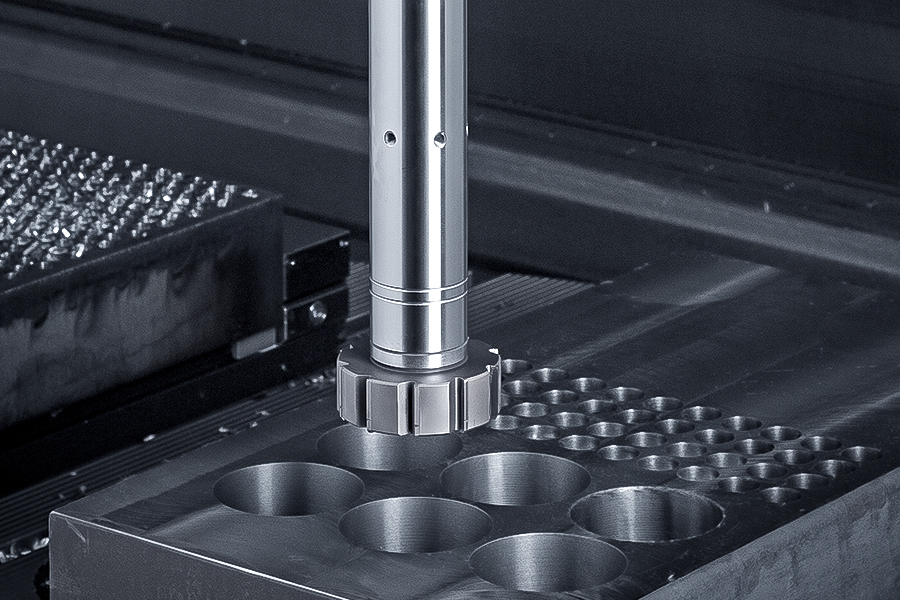
Current trends and future developments in reaming tools
Currently, tool manufacturers around the world are striving to produce reamers with ever more precise tolerances. For example, a reamer with a 0-tolerance would fulfil customer requirements perfectly. However, this also requires minimising the manufacturing tolerances of these tools, i.e. the tolerances that arise during grinding, coating and measuring the tools and add up.
Another trend is the increasing specialisation of reaming tools for machining innovative materials. Burr-free reaming of CFRP and fibre-reinforced plastics plays a particularly important role in lightweight construction.
Innovative materials & coatings for reaming tools
The research and development of new carbide substrates never stops at Gühring. For our high-performance reaming tools, we are working on perfectly matched, ultra-hard substrates that can be used to produce very sharp tools. In the field of tool materials, Cermet is also becoming increasingly important and is already being used at Gühring for standard tools.
At the same time, we are working on ever thinner coatings. We are already using the innovative HIPIMS process to apply these coatings in the field of reaming.
 Newsletter
Deep hole drill
Process reliability in the supreme discipline of machining
Milling tools
With these milling cutters, chips fly exactly as you want them to
Threading tools
Do you want perfectly formed threads? Click here for the right tool


