



Drills &
drilling tools
Sophisticated drill technology
Gühring manufactured its first HSS drill in 1898 and has remained true to its roots ever since. Our range of drilling tools is unrivalled on the market. The product range extends from micro-precision drills Ø 0.05 mm to specially designed solutions with Ø 180 mm and from HSS to solid carbide or PCD.
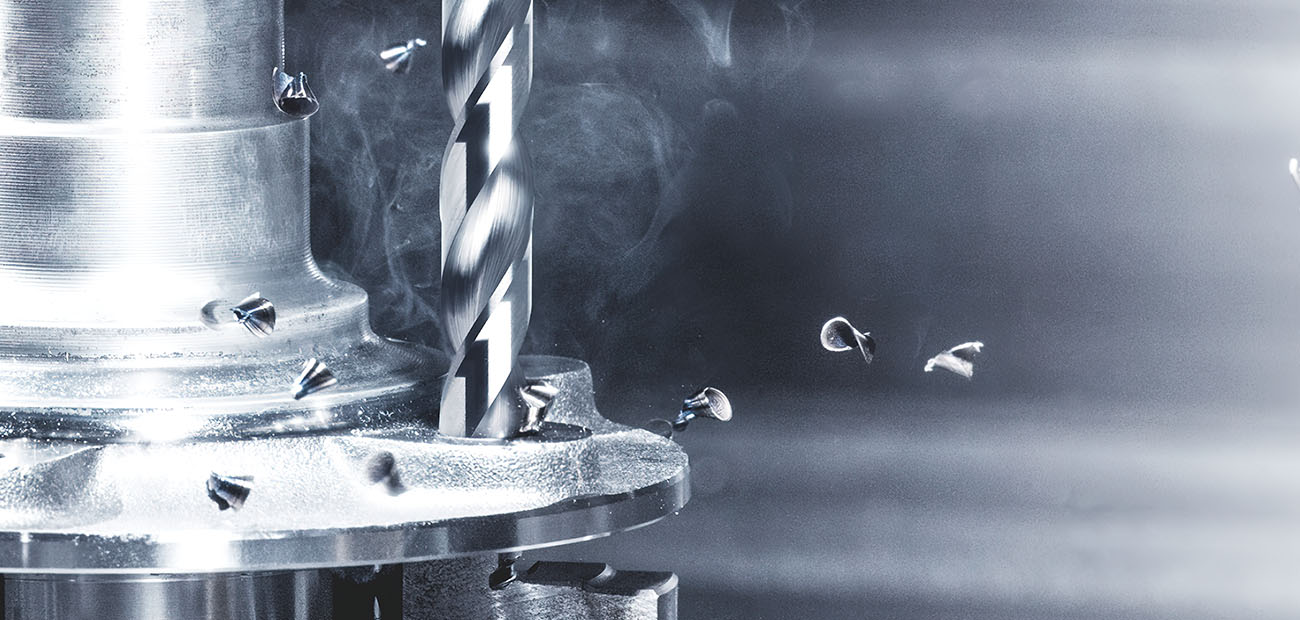
Metal drills
We set standards for the future
With over 600 patents worldwide, Gühring is a key driver of innovation in the field of metalworking. Increasingly high-performance materials and complex components demand even more efficient tools in order to meet the extreme requirements of machining.
You are currently viewing a placeholder content from YouTube. To access the actual content, click the button below. Please note that doing so will share data with third-party providers.
More InformationDrilling tools
Which drills are available?
Historically good – these are drilling tools from Gühring. Because we incorporate our 125 years of experience into the development of our drilling tools. This is how we offer you high-quality tools that guarantee precision and durability.
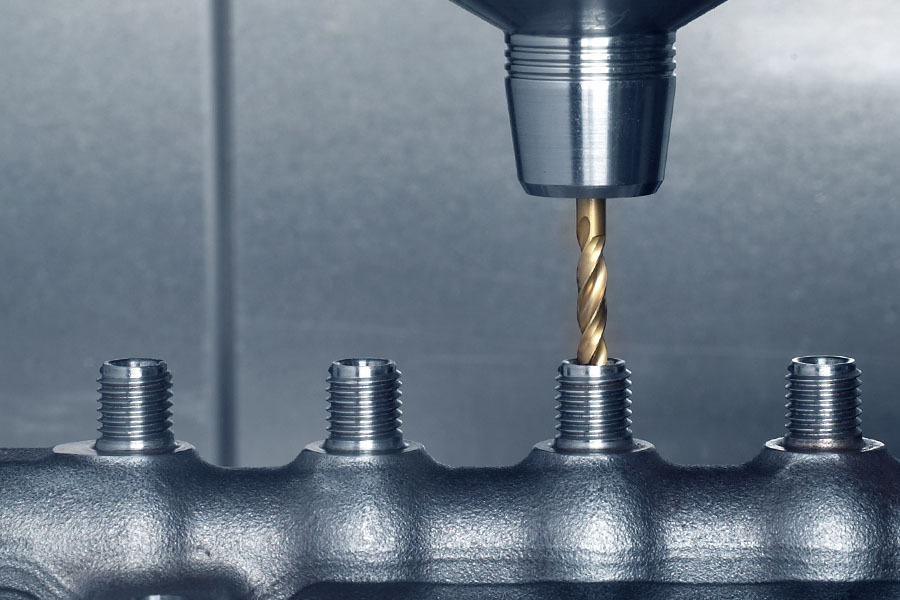
The product range in the field of drilling tools includes the following types of drills:
- twist drills from HSS and solid carbide
- step drills and core drills
- centre drills and NC spotting drills
- micro-precision drills with diameters up to Ø 0.05 mm
- deep hole drills for diameter length ratios of up to 80xD
- interchangeable insert drilling systems
Gühring tools for special applications
Which drills for high-grade steel?
Solid carbide or inox type high-speed steel drills are used for machining tough materials such as high-grade steel. Here, Gühring offers a material specialist: The solid carbide drill RT 100 InoxPro with a 140° point angle and 30° pitch. Tools with adapted geometry are used for machining stainless steels, which reduce the temperature development and produce short chips in these long-chipping materials. For optimum results, solid carbide drills with a suitable hard coating should be used.
Which drills for hardened steel?
Hardened steel is steel heated to a temperature of 750 to 1050 °C to increase its mechanical resistance. The use of a solid carbide drill bit, such as the ratio drill RT 100 H from Gühring, is recommended here.
Recognise metal drills
Metal drills are twist drills and are sometimes also referred to as helical flute drills. The front of the drill is ground to a cone shape and has two sharp cutting edges. Characteristic of metal drills is the sharp tip, which can easily drill through metal. The shaft behind this has a spiral flute that ensures the removal of chips.
Grinding drills
The manufacturing process of drill bits also includes the grinding of the cutting edges. The microstructure of cutting edges indicates under the microscope whether the cutting edge is sharp (chiselled) or rounded. Cutting edge chipping is avoided in high-quality drills, thus increasing their stability and surface quality. Cutting edge preparation processes include wet blasting, micro-blasting, drag grinding and brushing using robots.

 Academy
Twist drills
What are twist drills?
Twist drill is a generic term for different drill types such as metal drills, plastic drills, wood drills, universal drills, as well as stone and concrete drills. All twist drills have a common characteristic: the spiral-shaped flutes, to which the drill owe their name. Depending on the hardness of the material to be machined, different twist drills are used. These can be divided into three twist drill types.
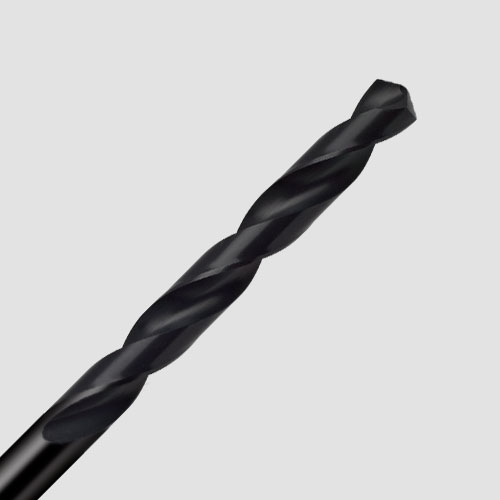
Type N
Type N twist drills are versatile and are well suited to a wide range of materials. Type N is characterised by a normal cutting edge geometry, which is optimised for use in steel and cast iron, for example.
- for normal materials such as cast iron
- versatile cutting wedge thanks to 30° helix angle
- 118° point angle
Type H
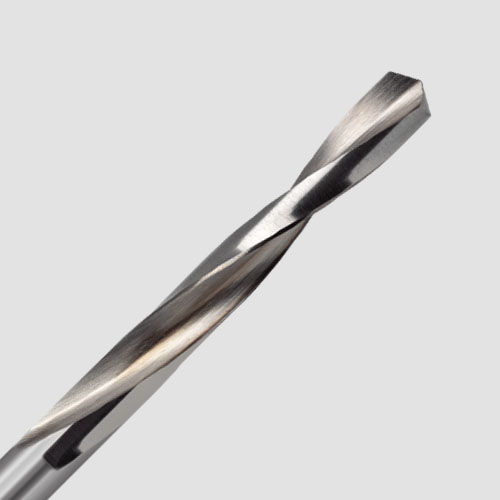
A twist drill type H has a special geometry for machining difficult-to-machine materials. It is characterised by its improved cutting performance and heat resistance, which makes it particularly suitable for demanding drilling tasks in harder materials.
- for hard and brittle materials such as bronze
- 15° helix angle leads to large wedge angle with less sharp, stable cutting edge
- 118°-point angle
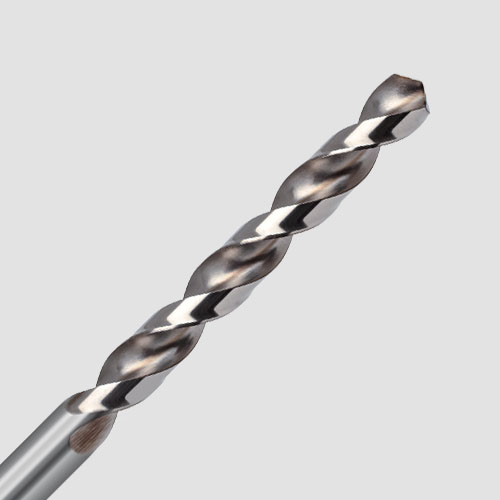
Type W
Type W drills are characterised by a short spiral and are particularly suitable for machining long-chipping, soft materials such as plastics, light metals, hardwood and chipboard.
- for soft materials such as aluminium
- 40° helix angle forms small wedge angle and therefore a sharp, unstable cutting edge
- 130° point angle
What are the advantages of the twist drill?
Clearance angle twist drills
The angles between the workpiece and the cutting edge influence the machining process and vary depending on the material to be machined. A distinction is made here between the clearance angle (alpha), the wedge angle (beta) and the rake angle (gamma). The clearance angle is ground into the tool to enable it to cut, and therefore has a decisive impact on the maximum feed rate. At the same time, it influences the friction between the clearance face of the cutting wedge and the cutting surface of the workpiece. A small clearance angle is suitable for hard and short-chipping materials, e.g. for high-alloy steel.
Grinding twist drills
The enormous range of materials to be machined requires a wide variety of grinding shapes.
With the grinding form A, the chisel edge is sharpened to reduce the axial forces. This means that in an additional working step with a grinding wheel, the chisel edge is reduced at defined angles.
Grinding form B is suitable for long-chipping materials such as structural steel and high-strength steel. It is a combination of form A and a main cutting edge correction. Here, the positive rake angle is corrected by a surface and the cutting wedge is ground “blunt”. This increases the resistance for the chip when drilling into the full. Chip packs form on the corrected surface, which are broken and transported away via the flutes.
The grinding form C corresponds to cross-grinding. With this type of grind, two surfaces are ground to each other so that they intersect at the chisel edge. This ensures excellent centring properties and lower feed forces. This allows the cross-grinding to produce more precise hole diameters and a perfect, round hole.
The grinding form D is a combination of form A and an additional point angle of usually 90°. It removes the cutting edge corner, creating two new, less sharp cutting corners. This makes the tool less sensitive to impact loads and increases its tool life. This grinding is mainly used in metalworking for grey cast iron, malleable cast iron and forged parts.
With grinding form E is a so-called centre point is ground. This geometry is characterised by excellent centring properties and a precise hole with a low burr development. This point is used for thin-walled workpieces, sheet metal and soft materials.
Twist drill set
Solid carbide drills
What is carbide?
Carbide is a sintered material, which means it has been baked under pressure. It is a mixture of various carbides and cobalt. It is therefore also referred to as sintered carbide.
Carbide drill usage
Where is carbide used?
Carbide is mainly used as cutting material for tools in the field of machining, such as drills, turning tools and milling tools. Due to the increased cutting values, tool lives and improved drilling qualities, carbide tools are ideal for series and large-scale production on CNC machines with stable clamping setup. However, the purchase price for carbide tools is significantly higher compared to HSS tools. Therefore, carbide is not always the most economical solution for machining. Especially in unstable conditions and small batch sizes, high speed steel tools are preferable.
What is a solid carbide drill?
In carbide drills, the tool body and cutting edges are made of different cutting materials. With a drill made from solid carbide, the manufacturer produces the entire tool from carbide. Solid carbide drills are suitable for particularly demanding machining tasks when high wear resistance and efficiency are required. The production of a perfect solid carbide drill starts with the composition of the cutting material. This is why Gühring manufactures the carbide for its tools itself.
Highlights
Solid carbide drill
Interchangeable head drilling system
BT 800
For fast head change and high cost-effectiveness
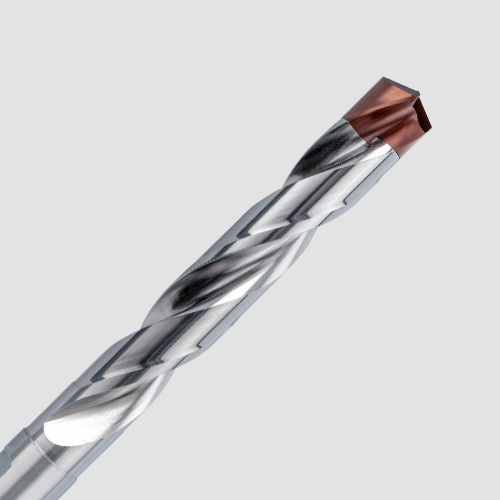
The BT 800 is a modular drilling system with a quick-change drill head thanks to its bayonet interface. It offers high cost-effectiveness through longer tool lives and reduced set-up times.
Your benefits with the BT 800:
- fast and simple handling in combination with long life and high performance
- economical alternative to solid carbide drills
- minimisation of set-up times
Solid carbide drill
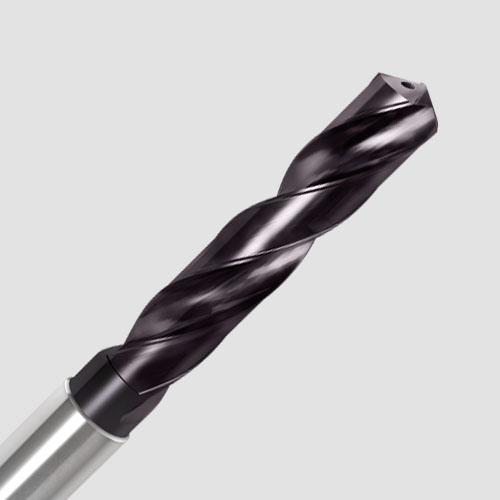
RT 100 InoxPro
Maximum productivity with drilling in INOX
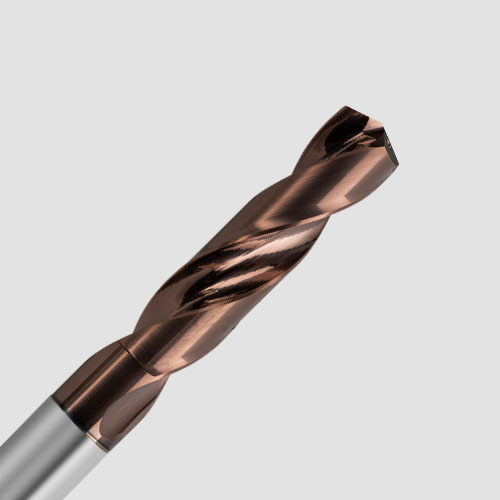
The solid carbide-drill RT 100 InoxPro has been specially designed for the production of precise holes in stainless steels, stainless alloys and titanium materials promising maximum cutting data and long tool lives.
Your benefits with the RT 100 InoxPro:
- 50% higher feed rate compared to conventional drills for stainless steels
- 60% higher tool lives compared to conventional stainless steel drills
- process-reliable even for deep holes up to 7xD and optimum chip control and removal
RT 100 InoxPro in the online shop more about the RT 100 InoxPro
Solid carbide drill
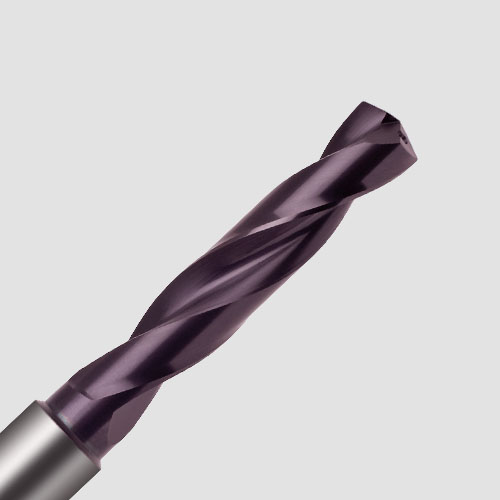
RT 100 XF
Our giant for extreme performance
The RT 100 XF impresses with extreme level of performance, flexibility and a wide range of application. In our standard range, it is the tool for outstanding machining processes.
Your benefits with the RT 100 XF:
- optimisation of all tool parameters for extreme feed rates and huge metal removal rate
- maximum utilisation of performance thanks to in-house high-end finishing
- cutting cycle times in series production, even with difficult-to-machine materials
Universal drill
RT 100 U
High-performance drill for almost all material groups
The versatile RT 100 U is ideally suited for machining a wide range of materials. The solid carbide drill allows for the highest cutting data and produces short chips.
Your advantages with the RT 100 U:
- optimised cutting edge geometry for high performance
- accurately aligned holes thanks to special sharpening and 2-facet point grind
- excellent self-centring behaviour thanks to 140° point angle
HSS-drill
Proven and in demand
Drills made from HSS/HSCO
Carbide or HSS drill? The competences of tool materials are clearly distributed – and carbide has by no means won over all areas of application. Particularly in small and medium series production, in unstable machining conditions, and whenever toughness is required, users still rely on drilling tools from high speed steel (HSS/HSCO).
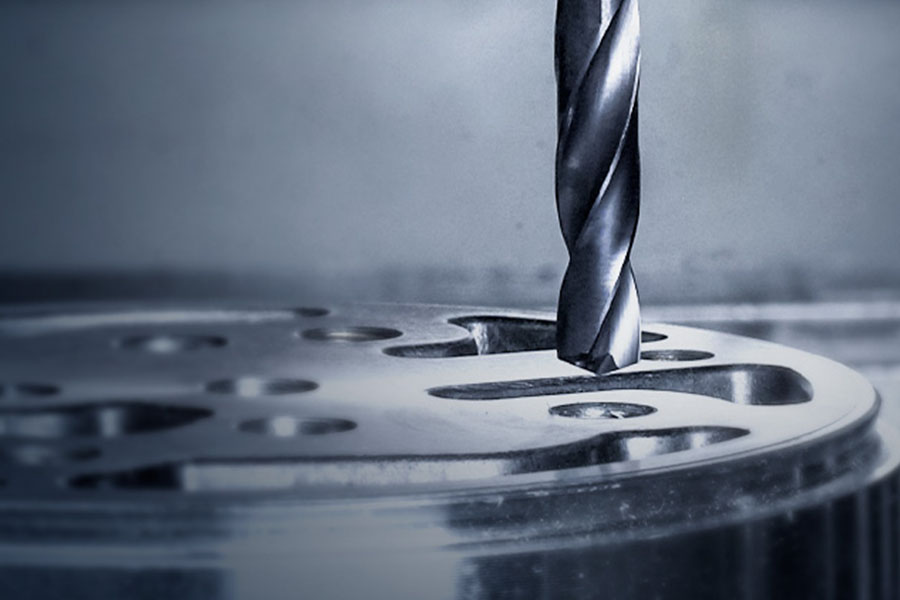
What are HSS drills?
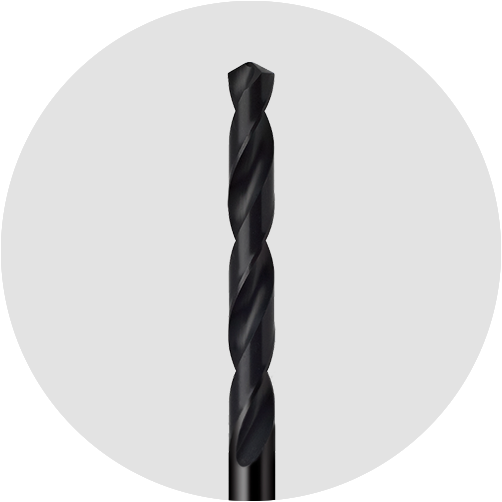
HSS drills are metal drills that are characterised by their universal application possibilities. Especially in small and medium series production, in unstable machining conditions and whenever toughness is required, users still rely on drilling tools made of high speed steel (HSS/HSCO).
HSS drill differences
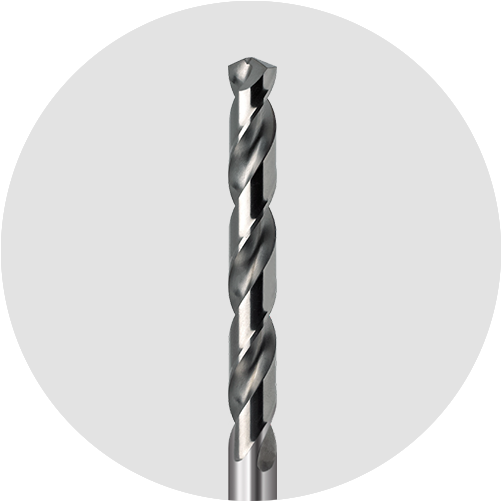
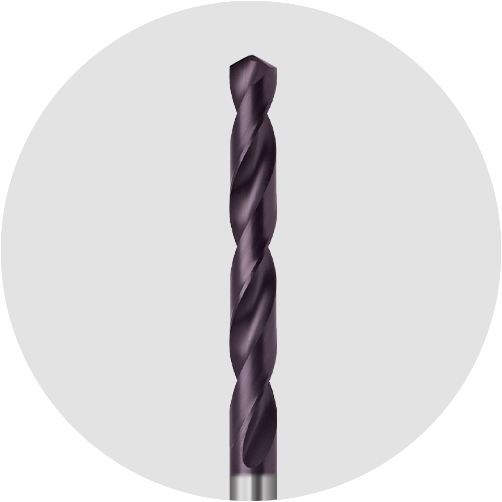
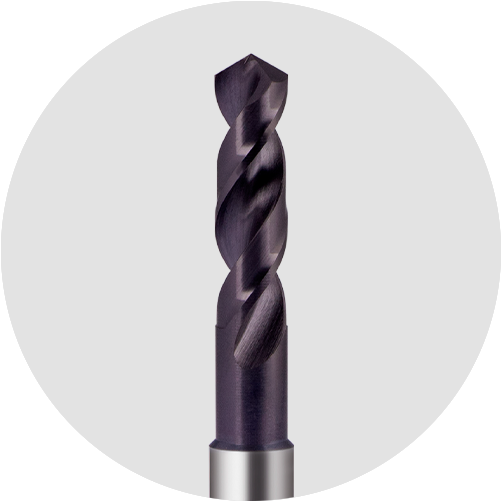
Depending on hardness and toughness, high speed steel is divided into different quality levels. Alloy components such as tungsten, molybdenum and cobalt are responsible for these properties. The higher the alloy components, the higher the tempering resistance, wear resistance and performance of the tool, but also the higher the purchase price. Therefore, when selecting the cutting material, it is important to consider how many holes will be produced in which material. For a small number of holes, the cheapest tool material HSS is recommended. For series production, higher-quality tool materials such as HSCO, M42 or HSS-E-PM should be selected.
 |
 |
 |
 |
|
|---|---|---|---|---|
| HSS type | HSS | HSCO (also HSS-E) | M42 (also HSCO) | PM HSS-E |
| Description | conventional work steel | cobalt alloyed high speed steel | 8% cobalt-containing high speed steel | powder metallurgical manufactured high speed steel |
| Composition | max. 4.5% cobalt and 2.6% vanadium | min. 4.5% cobalt and 2.6% vanadium | at least 8% cobalt | same ingredients as HSCO, different production |
| Application | universal application | application at high cutting temperatures / unfavourable cooling, high-grade steel | application for materials that are difficult to machine | application for series production and high demands on tool life |
| Tool life | + | ++ | +++ | ++++ |
How are HSS drills produced?
A distinction is made between roll-ground twist drills (HSS-R-drills) and twist drills with a ground drill point (HSS-G-drills) depending on the type of manufacture. An HSS-G-drill is ground from solid material. HSS-G drills offer greater accuracy and more precise working with lower tolerances than HSS-R drills.
Step drills
Step drills HSS / Gühring step drills
Which step drills does Gühring offer?
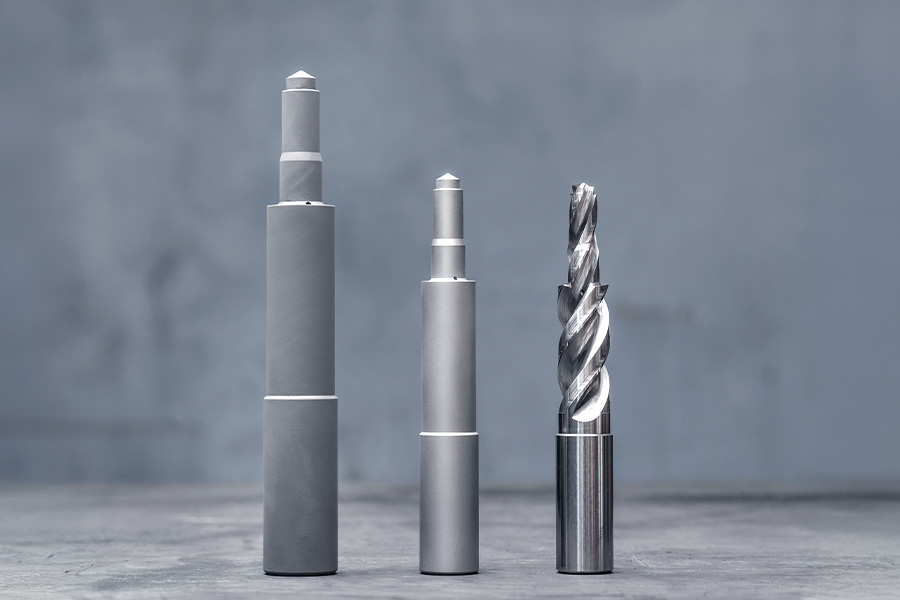
Step drills made of high speed steel (HSS) have a strong wear resistance and a high position accuracy at drilling. For this reason, Gühring offers various types of metal drills made from this high-alloy tool steel. A distinction is mainly made here between the two centring forms D and DR according to DIN 332. In addition to the standard “bright” surface option, there is also the option of “steam tempered” surface treatment for wear-reduced drilling. Our step drills with cylindrical shanks and morse tapers are available for clamping in standard chucks.
You are currently viewing a placeholder content from YouTube. To access the actual content, click the button below. Please note that doing so will share data with third-party providers.
More InformationWhy step drilling?
Step drills are often used in metalworking for drilling of screw head counterbores and thread core holes with counterbores. They are also suitable for stepped holes with high surface finishes.
With a step drill, several machining steps can be combined in one and holes with two or three diameters can be produced in one working step, which saves on tools. A major advantage of the step drills in contrast to drills with only one diameter is the reducing of work steps and tools required.
Centre drills
What are centre drills?
Centre drills are profile drilling tools and produce mounting holes for turning or grinding between centres. Centre drills are often made from high speed steel (HSS). The geometry of these drills is characterised by the short projection length and the stepped profile. At the front, the additional centre point, which also forms the nominal diameter of the tool, ensures high centring in the hole.
You are currently viewing a placeholder content from YouTube. To access the actual content, click the button below. Please note that doing so will share data with third-party providers.
More InformationHow does a centre drill work?
The mounting holes have high accuracy requirements. With its short tool length and small centre point, the centre drill can reduce the run-out of the drill and thus ensure better position accuracy.
Core drills
What is a core drill?
Core drills are used to enlarge pre-drilled, punched or cast holes to the desired finished size. Core drills can also be used to improve the unroundness, alignment deviation or surface defects in the drilled hole. In other words, core drills optimise the initial hole. If the hole is then to be machined with a reamer, core drills ensure the necessary accuracy of fit.
You are currently viewing a placeholder content from YouTube. To access the actual content, click the button below. Please note that doing so will share data with third-party providers.
More InformationGühring core drills
Gühring offers a wide range of core drilling tools for machining various materials, whereby Gühring core drills are designed as type N. Thanks to its helical angle of approx. 30°, the cutting wedge of type N is very versatile.
Micro drilling tools
Micro-machining is becoming increasingly important in all industries, from medical technology to the high-tech industry. Drilling is a central component of this. The smaller the components, the higher the demands of precision, repeatability and cost-effectiveness of the process.
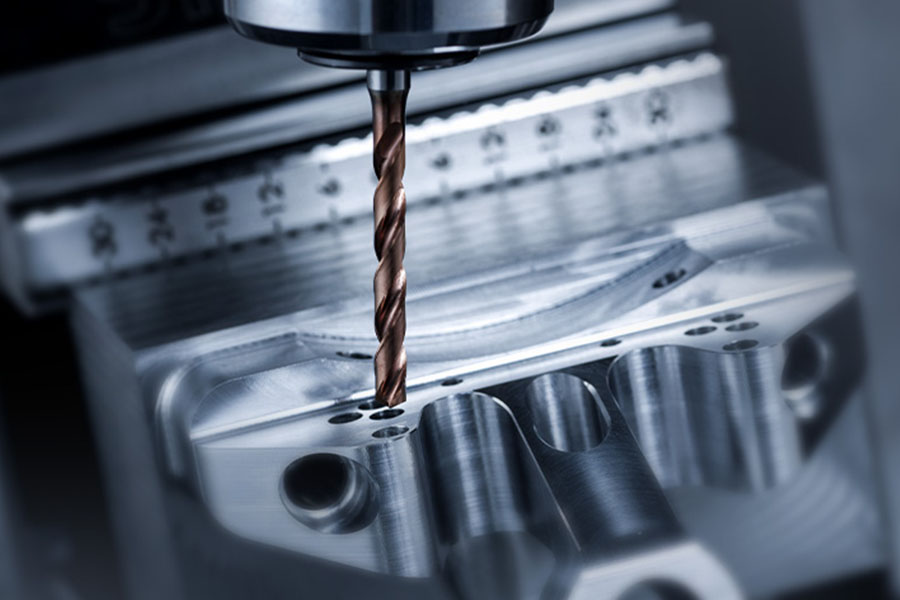
The extensive Gühring range of micro drills, composing solid carbide and HSS-E-PM micro drills, covers the entire diameter range from 0.05 mm to 3.0 mm in the HSS field and from 0.10 to 3.00 mm in the solid carbide field. The tools are available in lengths from 3xD to 15xD. Tools with internal cooling are available from a diameter of 1 mm in standard range.
Highlights
Micro drilling tools
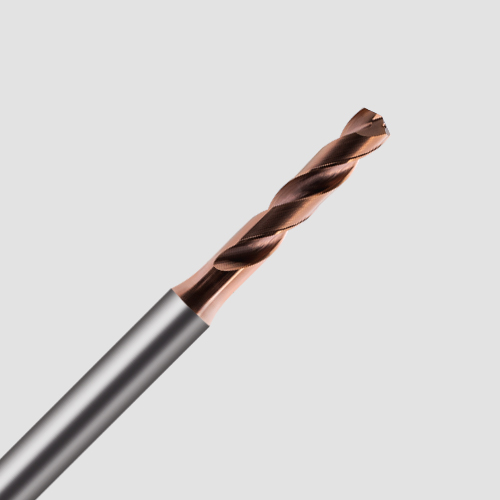
Solid carbide ExclusiveLine micro-precision drills
High performance in almost all materials
The solid carbide ExclusiveLine micro-precision drills enable high-performance machining of almost all materials. There is a universal version with maximum performance in steel materials and an INOX type, specially designed for the machining of stainless steels, special alloys and titanium. The adapted tip geometry, high-end coating and carbide selection ensure the highest cutting data and tool lives.
Your advantages with the solid carbide ExclusiveLine micro-precision drill:
- for maximum performance with highest cutting values and tool lives
- specialist for use in steel materials
- special geometry type INOX for stainless steels, special alloys and titanium
- with internal cooling from diameter 1.00 mm, without internal cooling from 0.50 mm
Application examples series production
Material: Alloyed case hardened steel 16MnCr5
internal cooling with 8% emulsion
- d = 2.5 mm
- Vc = 120 m/min
- n = 15,279 rpm
- fn = 0.14 mm/rev
- Vf = 2,139.06 mm/min
Material: stainless steel X6CrNiTi18 10
internal cooling with 12% emulsion
- d = 1.5 mm
- Vc = 80 m/min
- n = 16,980 rpm
- fn = 0.045 mm/rev
- Vf = 764 mm/min
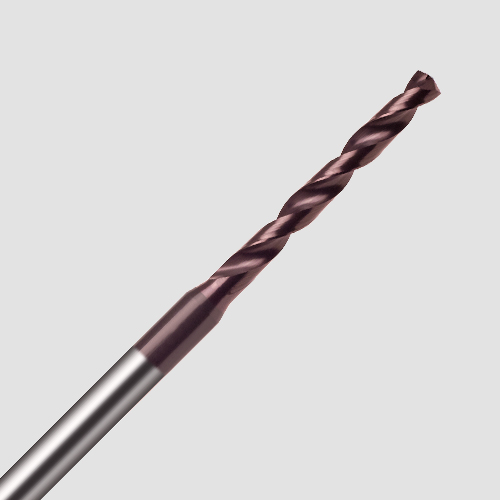
Solid carbide micro-precision drills
Extremely powerful in micromachining
The Gühring solid carbide micro-precision drills without coolant ducts cover the diameter range from 0.1 mm to 3.0 mm. With the solid carbide micro drills, extremely good cutting parameters and long tool lives can be realised under stable machining conditions and at high machine performance. The enormous performance of the solid carbide micro-precision drill is made possible by the use of ultra-fine carbide, which, in addition to its very high hardness and heat-resistance, also exhibits extreme and wear resistance.
Your advantages with the solid carbide micro-precision drill:
- for stable processing conditions
- higher cutting parameters and tool lives
Application example series production on rotary transfer machine
Material: quenched and tempered steel 42CrMo4
with external cooling 10% emulsion
- d = 1.2 mm
- Vc = 65 m/min
- n = 17,242 rpm
- fn = 0.06 mm/rev
- Vf = 1,035 mm/min
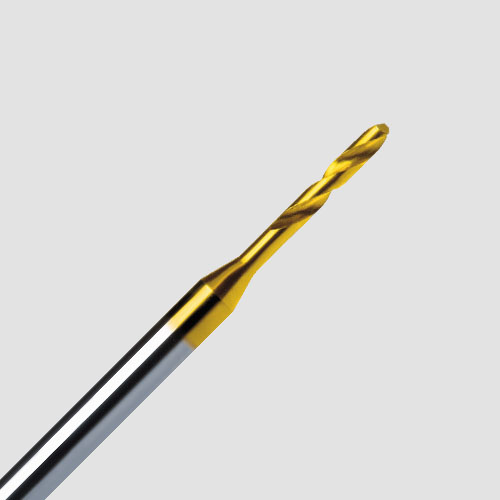
HSS-E PM micro-precision drills
Process-reliable and wear-resistant with HSS-E-steel
The Gühring HSS-E micro-precision drills made from high-performance powder metallurgy HSS-E-steel are characterised by very high wear resistance, high toughness and cutting edge stability, which is particularly important in unstable machining conditions. The powder metallurgy produced HSS-E-steel has a very homogeneous microstructure, which has a positive effect on the consistently high performance of the micro-precision drills.
Your advantages with the HSS-E-PM micro-precision drill:
- process-reliable under unstable machining conditions with this HSS-E drill
- wear-resistant HSS-E-PM and high cutting edge stability
Application example series production on multi-spindle machines with HSS-E drills
Material: stainless steel 1.4301
with external cooling 10% emulsion
- d = 2.0 mm
- Vc = 15 m/min
- n = 2,387 rpm
- fn = 0.03 mm/rev
- Vf = 71.61 mm/min
Indexable inserts
What is an indexable insert drill?
Indexable insert drills consist of a body made of tool steel with rake faces and flutes as holders for one or more interchangeable indexable inserts.
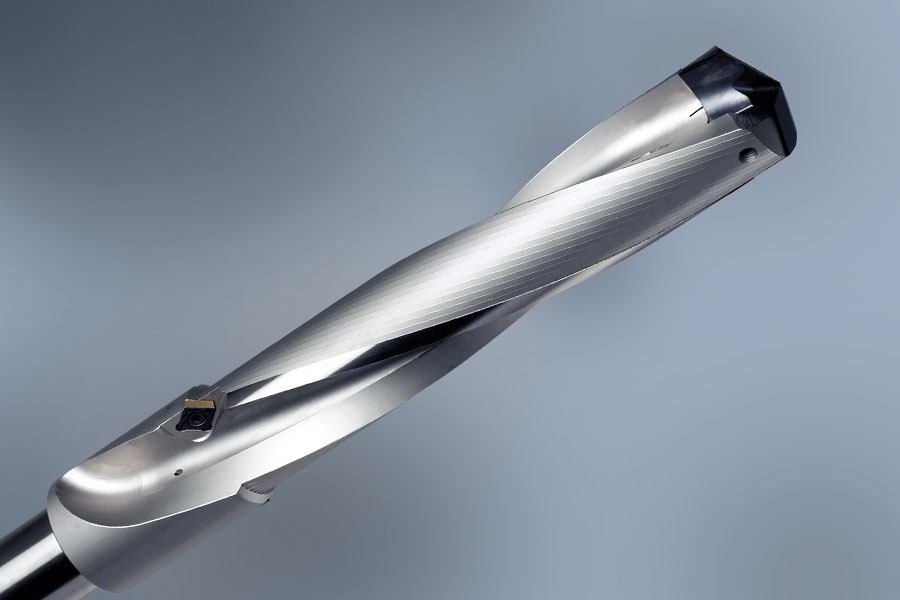
Carbide indexable inserts
With interchangeable inserts, the carrier/holder is made from a more cost-effective material and the insert is made from carbide. This is particularly worthwhile for very large drilling diameters. For use in the metal machining, indexable inserts are clamped or screwed into a tool holder. They usually have several cutting edges. If a cutting edge wears out, the insert is simply rotated.
How are carbide indexable inserts manufactured?
Indexable inserts are manufactured using a sintering process. In this process, carbide powder is pressed into shape and heated to approximately 1500 degrees Celsius, causing the powder to melt into carbide. After sintering, the geometry and size of the indexable insert are determined in a grinding process. Finally, the indexable inserts are coated with different coatings.
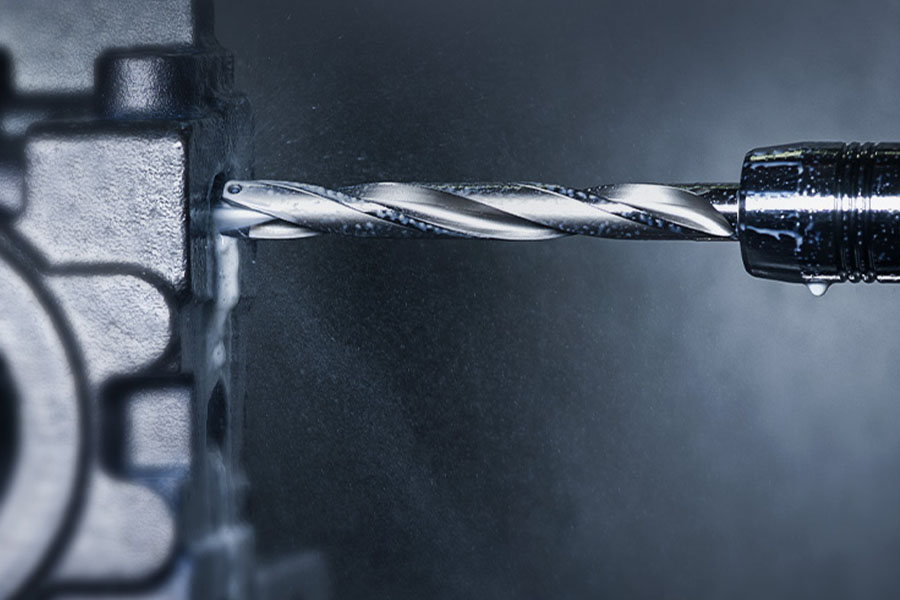
Interchangeable insert drilling systems for steel processing
Steel beams are usually prepared for assembly on special drilling/sawing systems. The clamping conditions on these machines are usually unstable. This places particularly high demands on the drilling tools.
Indexable insert drilling systems are an advanced solution for steel processing. Gühring offers the HT 800 system, for example, for efficient drilling of steel. The special indexable inserts offer high wear resistance and optimum process forces.
Highlights
Indexable inserts
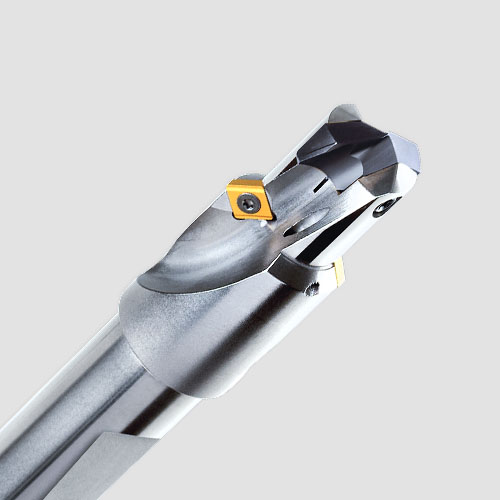
Interchangeable inserts drilling systems
HT 800 WP
Efficient machining of C-steel
The HT 800 consists of a wear-resistant steel carrier, the replaceable cutting body and a fine adjustment screw with a clamping principle. The clamping screws with screw lock improve the hold, even during machining operations with high vibration loads. This achieves the highest process reliability for holes up to 10xD.
Your advantages with the HT 800 WP:
- reduced burr development
- optimal centring properties
- smooth drilling behaviour
Application example hole in bush
- market segment: automotive
- component: bush
- drilling depth: 24 mm
- hole type: through hole
- diameter: 19.5 mm
- material: C40
- tool life: 6000 holes
- service life: 144 m
- cutting speed: 120 m/min
- feed per revolution: 0.35 mm/rev
 Newsletter
PCD/PCBN tools
Innovative tools for complex machining tasks
Extraction programmes
Selected products for your requirements
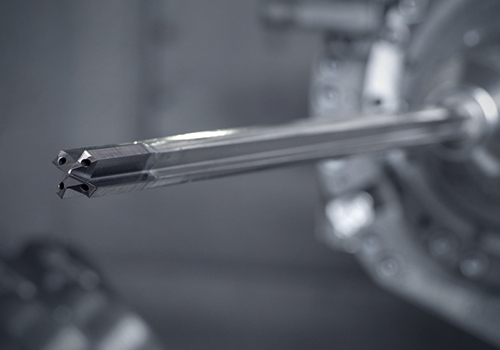
Deep hole drills
Process reliability in the supreme discipline of machining


