



Form inserts manufacture
Tools and strategies for deep hole drilling in mould making
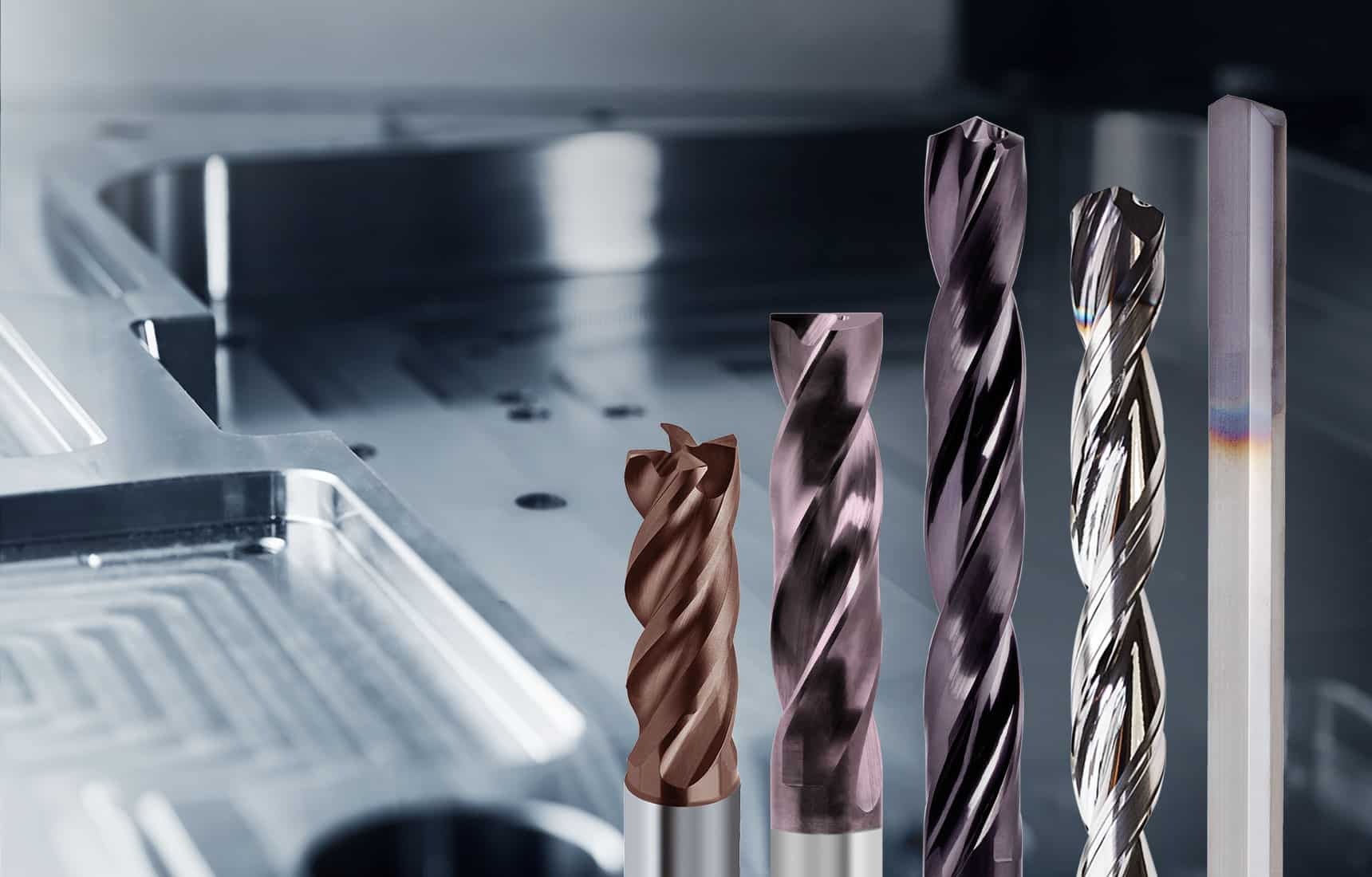
Deep hole drilling plays a significant role in the mould and die sector, especially in the production of injection moulding tools. High-quality cutting tools are indispensable for drilling holes with a high degree of precision and a good surface finish. For example, the tools must be equipped with suitable internal cooling in order to effectively remove chips from the deep holes. We have put together a selection of tools – plus cutting parameters – that ensure a successful deep hole drilling process.
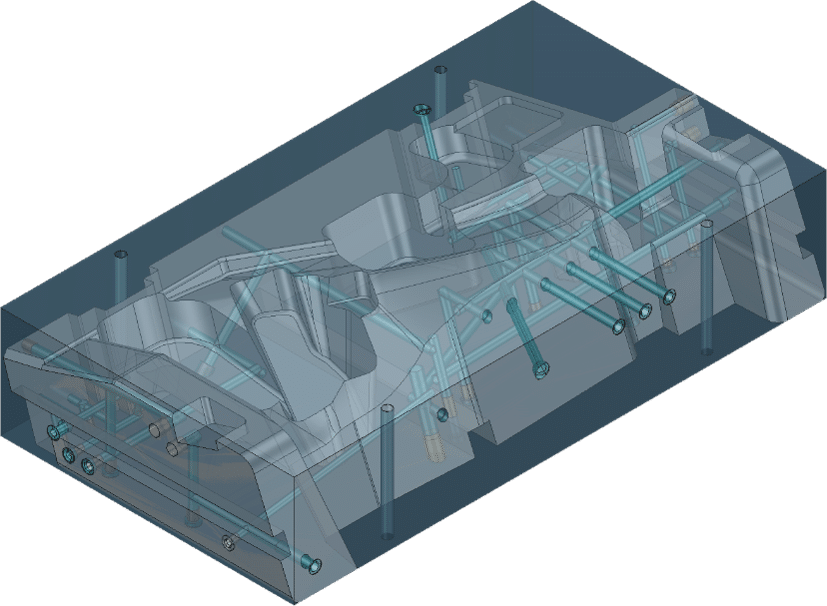
The component
A form insert made of steel
The right way to approach deep hole drilling
The procedure for deep hole drilling on a horizontal machining centre is typically divided into three steps:
- Finishing: This step is needed on curved and inclined surfaces. Here, a flat drill or milling tool is used to create a flat base on which drilling can then be performed.
- Piloting: Pilot drilling is required to drill a deep hole on a machining centre. This is between 1.5xD and 3xD deep and is used to guide the deep hole drill. Inadequate guidance influences the hole quality and the concentricity.
- Deep hole drilling: For the production of a deep hole, several tools in different lengths may be used one after another in order to gradually reach the required depth of the hole. This approach allows for better chip control, more stable holes and optimised machining times.
Step 1
Finishing on curved and inclined surfaces

RT 100 FB flat drill
You can skip the finishing and piloting steps by using the new RT 100 FB flat drill from Gühring. Thanks to its straight main cutting edge, drilling and piloting on inclined or curved surfaces is possible up to 45° without any deflection. The RT 100 FB with a Ø of 8 was used for this component. However, for shallow hole entries, we recommend opting for an alternative tool.
Cutting data
- cutting speed: 50 m/min
- feed rate: 0,125 mm/rev
- speed: 1.989 rpm
Alternative
RF 100 Diver end mill + piloting with the RT 100 XF
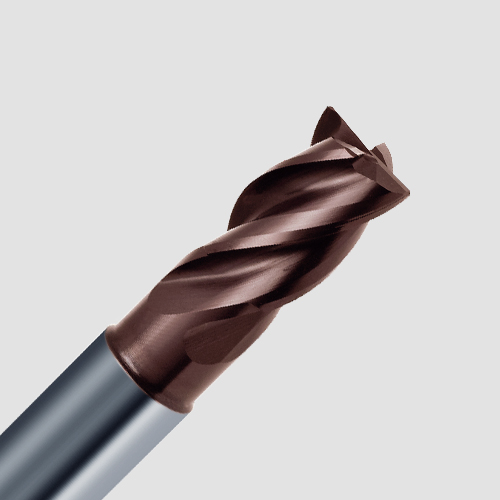
RF 100 Diver
If you don’t have a flat drill to hand, you can use a combination of finishing and piloting. A solid carbide milling cutter with a Ø of 7.7 is used here for initial milling or finishing. We recommend our RF 100 Diver solid carbide end mill for this purpose.
Cutting data
- cutting speed: 180.0 m/min
- feed rate: 0,0312 mm/Z
- speed: 7.441 rpm
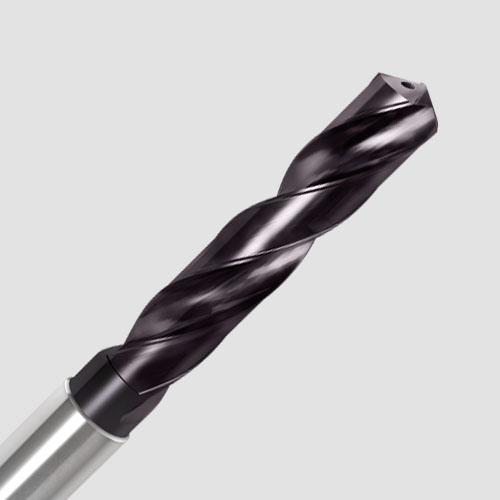
RT 100 XF
In order to later guide the deep hole drill perfectly, a pilot hole is drilled into the workpiece in the second step. The spiral solid carbide drill RT 100 XF with a Ø of 8 is suitable for this. It drills to a depth of 24 mm (3xD). The tool is perfect for piloting in steel: Its four guide chamfers grip extremely early, thus perfecting coaxiality and ensuring a very high hole quality. This is important because the quality of the pilot drilling determines the further deep hole drilling process.
Cutting data
- speed: 2588 rpm
- feed rate: 518 mm/min
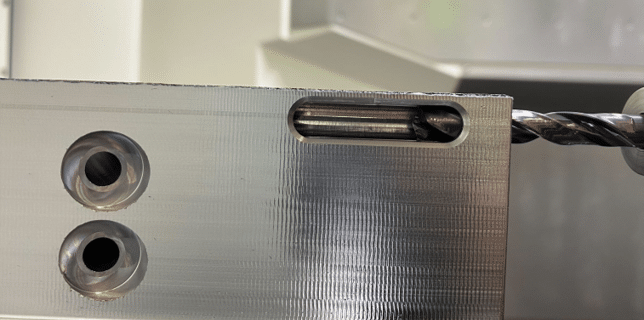
Step 2
Deep hole drilling with the RT 100 T
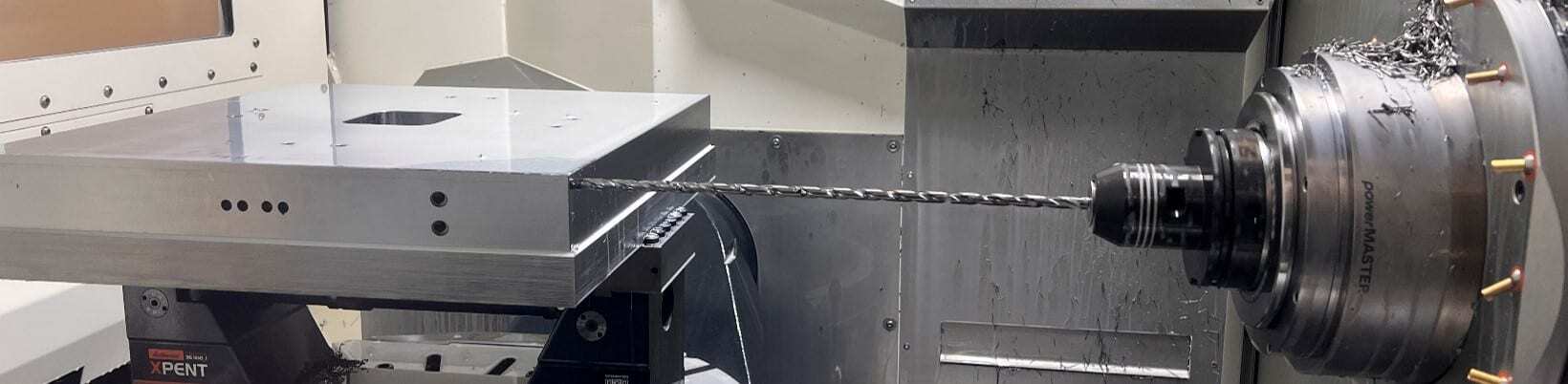
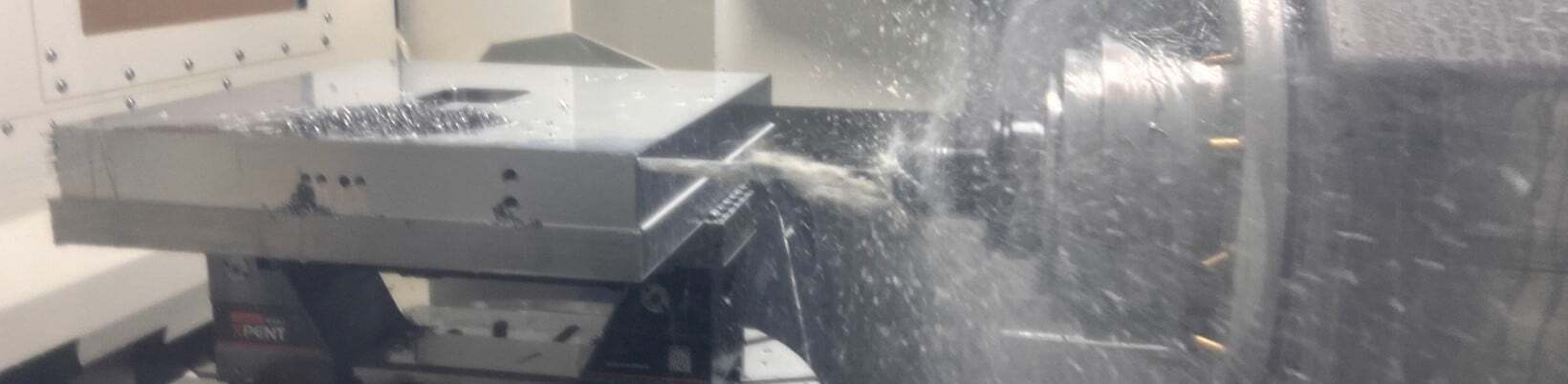
- Drill into the pilot hole at reduced speed
- Switch on cooling and increase speed
- Drill continuously to the full drilling depth without interruption
- Reduce speed and pull out of the hole at max. 5000 mm/min and with a rotating spindle
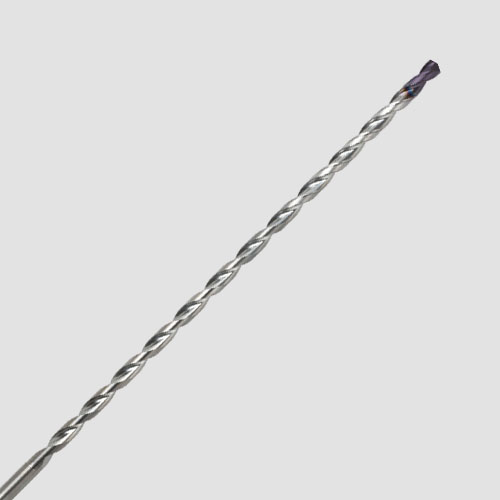
Step 3
Finish drilling with the EB 100 M


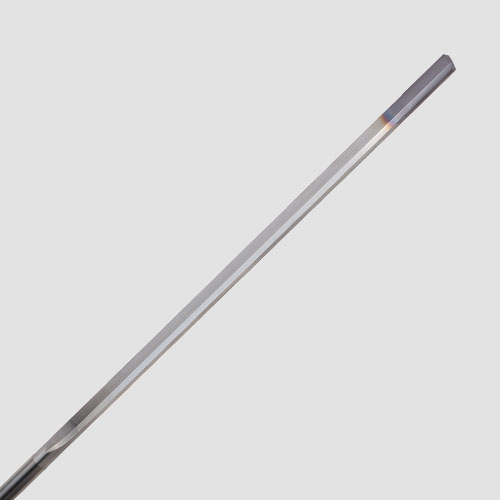
- drill hole
- increase cutting values
- drill to total depth
- pull out at reduced speed
Cutting data
- speed: 3008 rpm
- feed rate: 39 mm/min
We can also be reached on WhatsApp: +49 172 658 53 53. Save the number!

Deep hole drilling in cast iron at double the speed
When you need to drill deep holes into powertrain components, these tools are the specialists: the VB 80 and the VB 100. Not only can the four-fluted cutters produce a wide diameter range, but they can also achieve drilling depths of up to 40xD.

Successful pocket milling in grade 5 titanium
A customer uses grade 5 titanium to make the case for pacemaker batteries, but machining the material is challenging. Gühring has the solution: The G-Mold 65 HF solid carbide end mill enabled it to extend the tool life 73 times over.
This strategy ensures successful cross drilling
The machining of intersecting deep holes can be tricky: This is because the cooling process is interrupted, creating an adverse spot drilling or guidance situation. Gaps can only be bridged with the right strategy.


