



Milling tools
With us, the chips fly the way they should
The milling is one of the most versatile manufacturing processes in metalworking. This is because a milling cutter can be used to produce precise, complex components. Gühring manufactures milling tools from a variety of cutting materials that are suitable for machining different materials.
Milling tools in the online shop
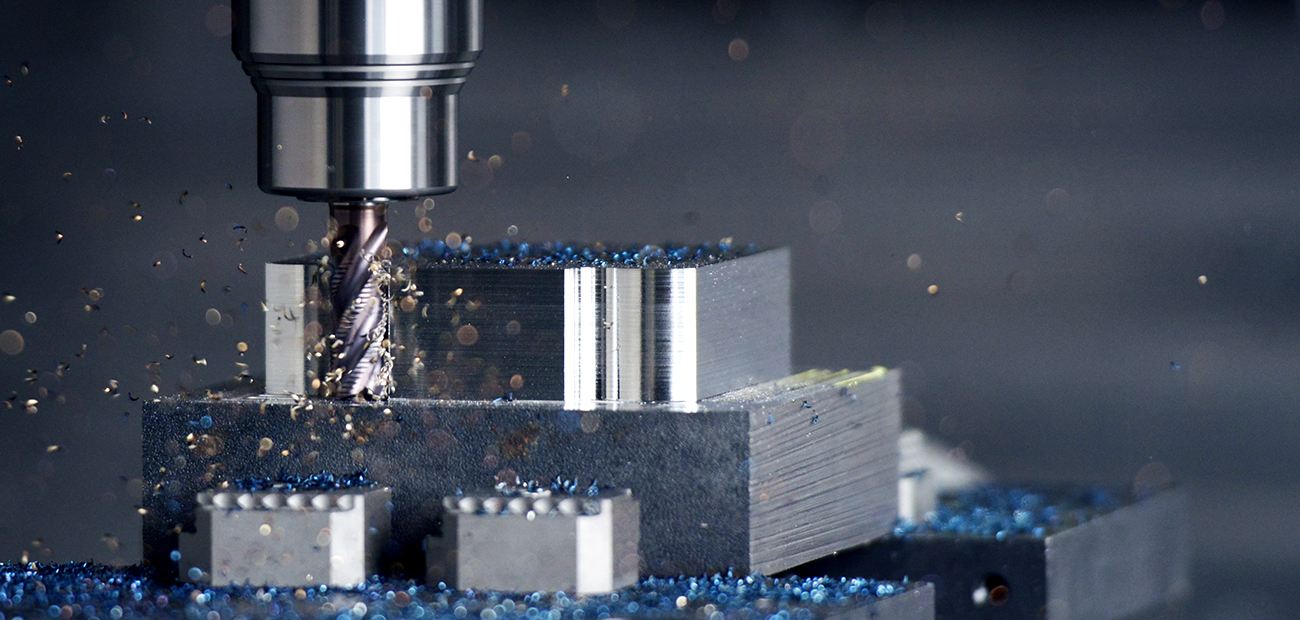
Milling with a massive metal removal rate
1.000 cm³ steel (16MnCr5) per minute – this incredible metal removal rate was achieved by combining a powerful Chiron machining centre and our roughing end mill RF 100 Speed. Experience the cutting record now in the video.
You are currently viewing a placeholder content from YouTube. To access the actual content, click the button below. Please note that doing so will share data with third-party providers.
More InformationMilling basics
Milling definition
Milling is a machining process with geometrically defined cutting edges and an interrupted cut. The aim of milling is to produce defined workpieces. Milling tools have one or more cutting edges and enable both vertical, horizontal and inclined machining of the materials to the axis of rotation.
How does milling work?
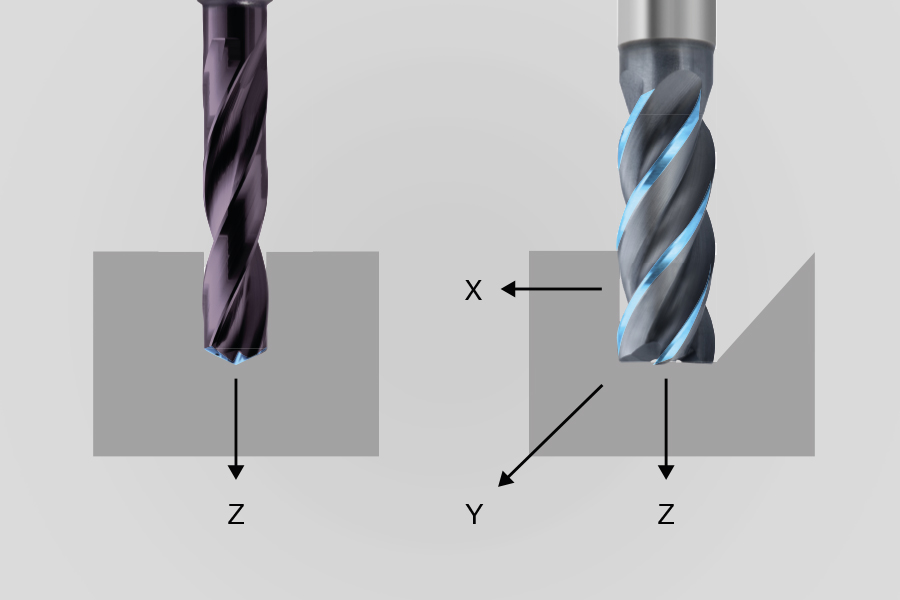
A milling cutter continuously removes material from a raw part in the form of chips. Unlike a drill, which only cuts at the tip (main cutting edge), the milling cutter cuts at the circumference, the main cutting edge, the side cutting edge and at the face. This allows the milling cutter to machine materials simultaneously in different directions, also known as axes. During chip removal, the tools turn around their own axis at high speed and move simultaneously according to the contour to be produced. The shape of the workpiece is therefore the result of the infeed width (ae) and the infeed depth (ap).
Milling strategies
The following application purposes for milling cutters are distinguished:
Angle on the milling cutter
Like the main cutting edge, the rake angle on the milling tool is also located on the circumference. Depending on the materials to be machined, the rake angle is between minus 15 and plus 25 degrees. Tools with a positive rake angle cut the material with a soft cut and produce a flowing chip. Tools with a negative rake angle are characterised by a scraping cut. Large rake angles of 10 to 25 degrees produce a sharp cutting edge and are suitable for the milling of very soft and sticky materials. The clearance angle is manufactured in two variants: with radial relief grinding, it produces very smooth cutting behaviour and a stable cutting edge, which is why it is suitable for machining stainless and heat-resistant steels, for example. The clearance angle with facet cut produces a cutting edge up to aggressive cutting behaviour.
Milling tools are also designed with different helix angles – from zero to 55 degrees. The smaller the helix angle, the fewer contact points are created between tool and the workpiece. Tools with a smaller helix angle therefore only achieve a low running smoothness and are more suitable for roughing. Tools with a larger helix angle score with a higher running smoothness and are used for finishing.
Climb and conventional milling
You are currently viewing a placeholder content from YouTube. To access the actual content, click the button below. Please note that doing so will share data with third-party providers.
More InformationClimb milling
When climb milling, the cutting edge performs a rotating movement in the feed direction of the workpiece. This means that the force exerted is highest when the cutting edge enters. The climb milling is preferable due to the higher tool lives and the better surfaces on the component.
You are currently viewing a placeholder content from YouTube. To access the actual content, click the button below. Please note that doing so will share data with third-party providers.
More InformationConventional milling
In conventional milling, the milling cutter rotates against the feed direction of the workpiece. This results in a thickening chip, the force required increases sharply from the entry of the cutting edge to the exit.
Milling metal
Mastering material diversity with Gühring
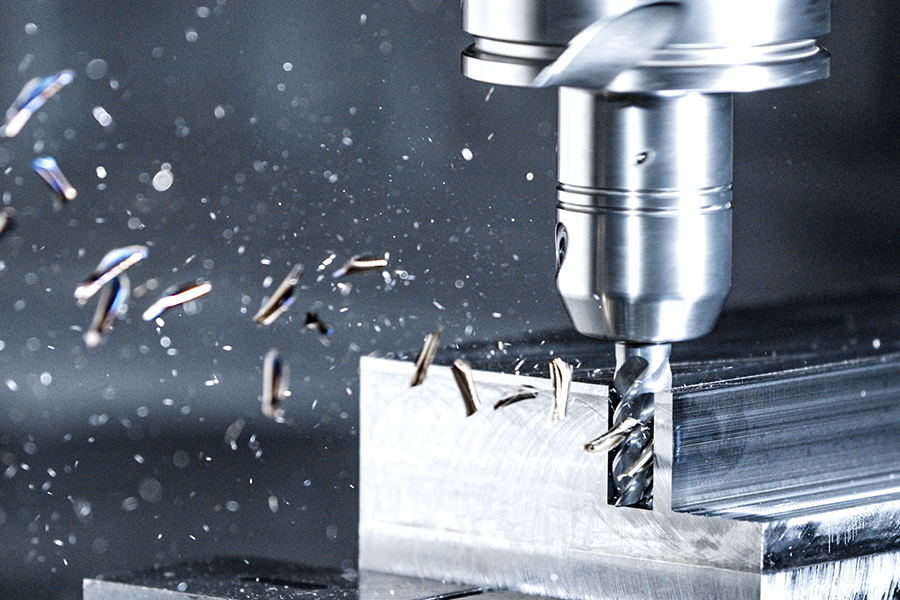
Milling tools can be used to machine components made of metal, plastic and wood. The tool materials and geometries must be matched to the materials to be machined and the manufacturing process; this is the only way to achieve optimum results and long tool lives.
Milling tools metal overview
In metalworking, a distinction is made between solid milling tools or end mills and carrier tools. Carrier tools are milling cutters with interchangeable indexable inserts. They can be converted to a different milling operation in just a few simple steps. With end mills, the cutting edge and the shank consist of one piece. Each tool is designed for a specific task and can therefore only be used for this specific process.
| Milling cutter type | Application |
|---|---|
| Corner milling cutter and edge milling cutter | When corner milling, two surfaces can be processed at the same time. This creates flat shoulders with “real” 90° angles. |
| Face milling cutter | Face cutters are used to mill flat surfaces, usually with a adjustment angle of 45°. |
| Disc cutters | These disc-shaped tools have a particularly narrow diameter and are used to cut off workpiece parts with dimensional accuracy. |
| Contour milling cutters | Contour milling cutters are suitable for milling complex 3D contours with few milling paths and precisely defined paths. |
| Slot milling cutters | Slot milling cutters are used to create slotting and recesses in components. Workpieces can be joined together using slotting. |
| Chamfer milling cutters | A chamfer milling cutter can be used to break edges on workpieces. |
| Gear milling cutters | These include cylindrical milling cutters or tooth form cutters, which can be used to produce gears of all kinds. |
| Thread milling cutter | Thread cutters are used to produce dimensionally accurate internal and external thread. |
| Countersink cutters | These conical milling cutters enable the production of countersinking, for example for screw heads with different angles. |
Milling CNC
What is CNC milling?
CNC machine tools are used for milling, particularly in the metalworking industry. This modern control technology enables the automated and therefore cost-effective production of high-precision workpieces. The machinist uses computerised numerical control (CNC) technology and first designs the desired workpiece using a CAD programme. A CAM system then assigns parameters such as speed, feed rate and cutting depth to this model and transfers it to the CNC software. Series production on CNC milling machines is particularly cost-effective because they can achieve cutting speeds of up to 18,000 revolutions per minute, and even over 50,000 revolutions per minute on high-speed machines.

 Navigator
End mills
What is an end mill?
In an end mill, the cutting surface and clamping surface consist of a single piece. The integrated shank is clamped into the milling cutter holder of the machine. The clamping shank can be cylindrical or tapered. End mills are available in many different designs and are suitable for manufacturing slots, slotting, pockets, recesses, dies and hollow shapes. Gühring offers various end mill products, such as roughing and finishing end mills.
End mill designation
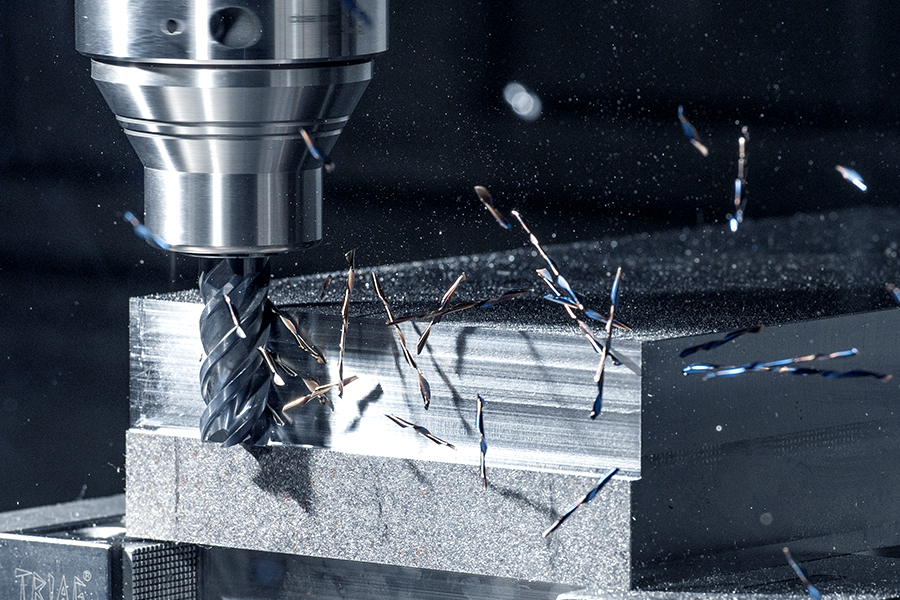
End mills with straight shanks are defined in the ISO-standard DIN 844. The standard contains information on dimensions, tool materials, designs and labelling of the tools. DIN 845 specifies the requirements on end mills with morse taper shanks.
End mill carbide
End mills for metalworking can be made from different cutting materials. Commonly used are high speed steel (HSS) and solid carbide.
Universal milling cutters or high-performance cutters made of solid carbide are used on modern CNC machines. They are particularly suitable for series production. High machining speeds make them very efficient. They also achieve high tool lives as well as cutting depths and cutting widths. Overall, they are characterised by a high cost-effectiveness. The disadvantages of solid carbide milling cutters are their higher purchase price. They are also not suitable for production processes with unstable machine conditions.
HSS end mills
HSS milling cutters are made from high speed steel. The main advantage of HSS cutters over solid carbide cutters is their favourable purchase price. The disadvantages, on the other hand, are the low machining speed and the low tool life. This is why milling cutters made of HSS and HSS-E are rarely used in series production
End mills for aluminium
Aluminium has a low weight and high conductivity, which makes it a popular material in the electrical industry, for example. However, the milling of aluminium is very demanding because the material becomes soft due to the heat generated during milling and the chips stick to the cutting edges of the milling tools. A single flute cutter is best suited for machining aluminium because the risk of chips “sticking” is lowest here. For medium-hard aluminium alloys, double and multi-cutters can also be used.
Why are end mills helical?
In most cases, end mills are used for metalworking, the slotting of which are arranged in a spiral. This has several advantages: the helical teeth result in a uniform cut, a uniform cutting force and smoother running of the machine. In addition, chips are transported off to the side and do not enter the hole.
Overview of end mill diameters
The milling cutter portfolio from Gühring includes many common dimensions. For example, Gühring offers four-edged solid carbide-end mills with a nominal diameter of 2 mm. Different coatings are possible. Micro milling cutters are available from 0.3 to 3.2 mm. We also offer a solid carbide end mill with 6 mm diameter and AlCrN coating. Large diameters are mainly used for high-performance milling because they can achieve higher metal removal rate. Gühring offers solid carbide end mills with diameters from 12 to 32 mm. For machining operations where extra long milling cutters are required, Gühring offers the end mill-series XL. These have a total length of up to 150 mm.
End mill set
Guehring assembles several solid carbide end mills into practical sets for different milling applications. Such sets include, for example, four flute cutters with diameters from 6 to 12 mm.
Highlights
Solid carbide end mill
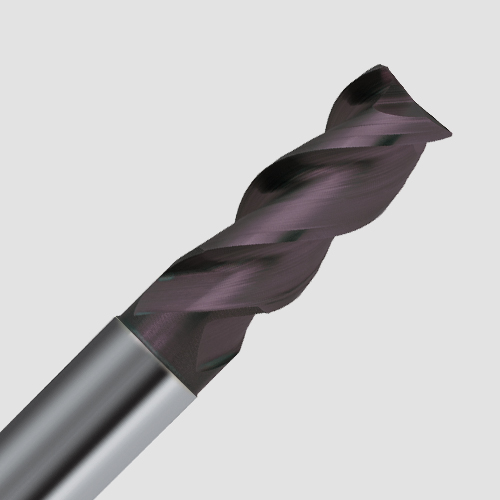
Solid carbide end mill
RF 100 U
Our expert in steel and casting
Steel, cast iron and hardened steel with tensile strengths of up to 1,400 N/mm² are no problem for the RF 100 U. Thanks to its unequal helix angle, the Ratio 3-fluted cutter produces a particularly light cut even with large infeeds.
Your advantages with the RF 100 U:
- faster plunging with the innovative face grinding
- large chip spaces for optimal chip removal with slotting and plunging
- higher tool lives thanks to micro corner protection
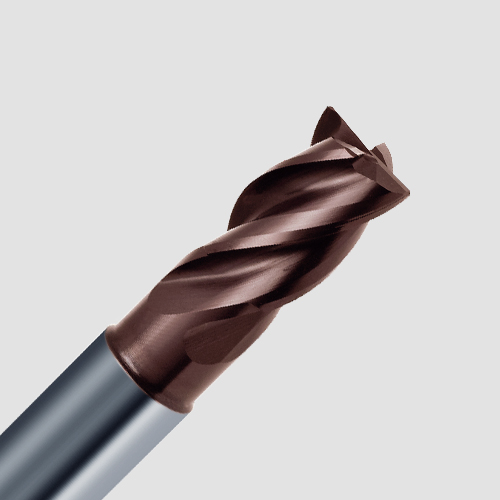
Solid carbide end mill
RF 100 Diver
The plunge milling cutter for 5 milling operations
The RF 100 Diver has established itself for customers with a high demand for flexibility because it covers five operations at once. The tool features an innovative coolant supply that perfectly cools and protects both the face and circumferential geometry during drilling and diving.
Your advantages with the RF 100 Diver:
- up to 40 per cent longer life thanks to innovative cooling technology
- for all materials, especially sticky, stainless and heat-resistant materials
- special ultra-fine grain for maximum efficiency and tool stability
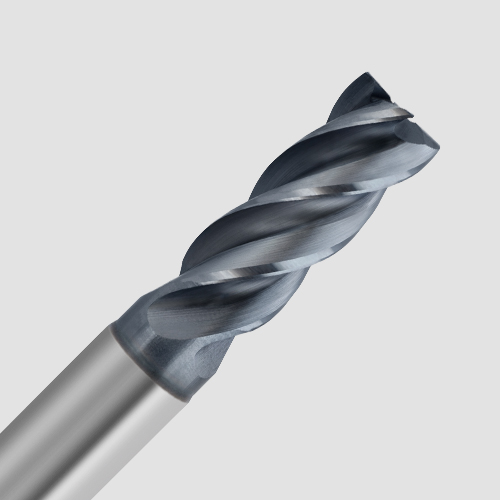
Solid carbide end mill
RF 100 Sharp
Our sharpest solid carbide milling cutter
Chip jam at milling soft-tough materials, difficult machine conditions, slow cutting speeds the RF 100 Sharp solves all these problems. With the solid carbide milling cutter, you can achieve extremely high cutting speeds and metal removal rates.
Your advantages with the RF 100 Sharp:
- safe chip removal thanks to specially customised flute geometry
- powerful in soft-tough and high-alloy materials
- reduction of cutting pressure and cutting forces
- high wear protection thanks to AlCrN layer
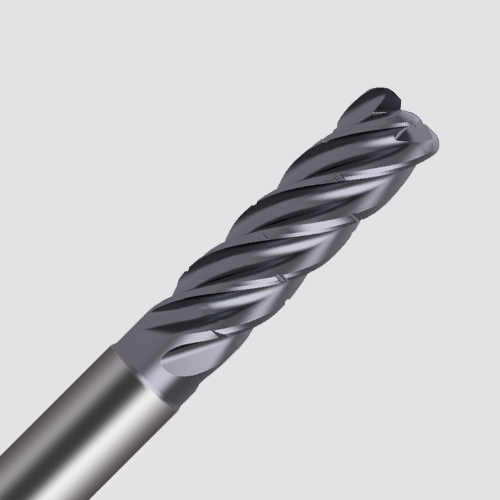
Solid carbide end mill
RF 100 Speed
The tool for highest cutting parameters
The RF 100 Speed is the fastest ratio milling cutter in our programme. Especially with the machining of very tough materials, the solid carbide-milling cutter can realise high metal removal rate with stable process reliability.
Your advantages with the RF 100 Speed:
- high-performance roughing even at high cutting depths
- high running smoothness and large metal removal rate
- universal GTC milling in various steel and cast iron grades, stainless steels and special alloys
Roughing end mill
What is rough milling?
Rough milling usually involves the use of end mills with roughing profiles. A high infeed width and depth are used to remove a lot of material in the shortest possible time. This rough pre-machining produces a rough surface on which machining marks are visible. This is usually followed by the fine machining of the workpiece.
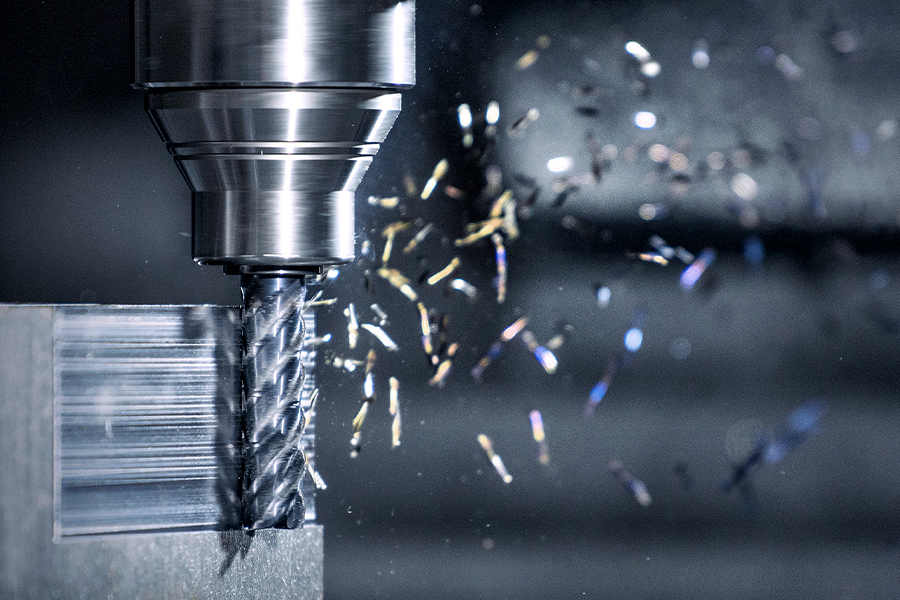
Roughing end mill vs finishing end mill
The finishing often follows on from the roughing with the aim of improving the surface quality as well as dimensional and form accuracy. This milling process removes smaller amounts of material from the workpiece. When cutting with the finishing end mill, larger chips are produced, which are removed from the work area with compressed air or cooling lubricant. In addition, an end mill with roughing profile generates lower cutting forces compared to the smooth-edged finishing end mill and therefore requires less drive power. Finishing end mills unfold their potential above all in vibration-free machining operations on stable, powerful machines, short unclamping and good cooling. Tools with roughing profile, on the other hand, also work in vibration-prone machining operations.
Roughing end mills for metal
Roughing end mills for metalworking are exposed to high mechanical loads. It is therefore essential to use a high-quality tool material in this field, which has a high toughness and insensitivity to rapid temperature fluctuations.
HSS roughing end mill
HSS roughing end mills are made of high speed steel (high-performance high-speed steel) and enable fast and efficient machining of metals and plastics. Gühring offers fine-toothed roughing end mills made of HSS-E with different numbers of cutting edges and surface treatments such as the roughing end mill GS 80.
Roughing end mills for aluminium
A particular challenge with milling aluminium is the heat generated by the material. With the ratio end mill Alu RF 100 A, Gühring offers a new roughing end mill especially for the machining of aluminium with reliable internal cooling.
Chamfer milling cutter
What is a chamfer milling cutter?
A chamfer milling cutter is used to break sharp edges on workpieces and perform chamfering. V-cuts, undercuts, deburring along workpiece edges and the preparation of tools for welding are also common chamfer milling machining operations. Chamfer milling cutters are available in various angles; 45° is generally used for simple edge breaking.
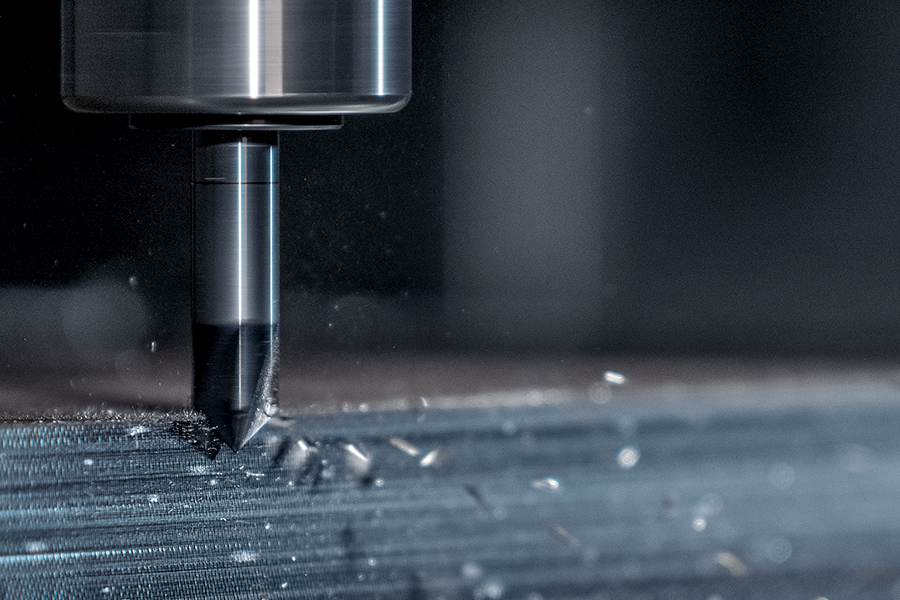
Chamfer milling cutter for metal
The choice of milling cutter depends, among other things, on the material to be machined. Gühring has a specialised chamfer milling cutter for metal machining: the SpyroTec. The solid carbide tool ensures efficient milling thanks to its spiralised cutting edge geometry and TiAlN coating.
Milling heads
What is a milling head?
A milling head (also cutterhead) is a milling tool into which interchangeable inserts are inserted. Cutter heads consist of a basic tool with a machine interface and a cutter holder.
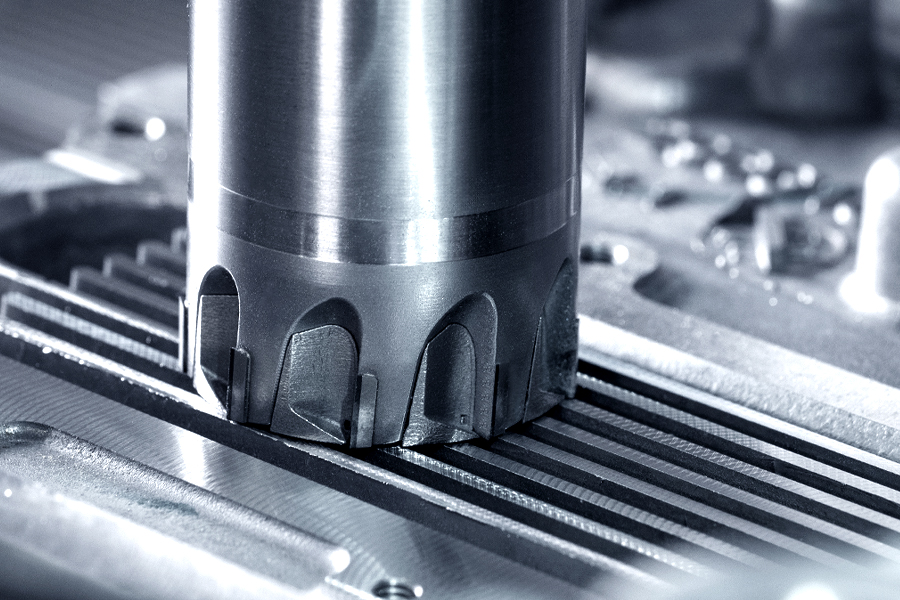
Milling heads for metal
Milling heads are mainly used in metalworking for face milling and have four to 50 cutting edges. Older milling heads have soldered cutting edges made of carbide, modern ones have replaceable interchangeable inserts, usually made of carbide. Gühring also offers various milling cutters with cutting edges made of PCD, which enable an even more efficient face milling.
Milling head types
In the field of milling heads, a distinction is made between different designs:
A face milling head with a adjustment angle between 45° and 90° is used for machining surfaces. A corner milling head is used for face and peripheral milling and has a adjustment angle of 90°. Round indexable inserts are usually used in form milling heads, which make free-form milling or profile milling possible. Hedgehog milling cutters are suitable for milling with extremely high cutting depths, which is why their interchangeable inserts are arranged one above the other and offset. Milling heads are also differentiated according to the number of interchangeable inserts that can be used and the different requirements for long-chipping or short-chipping material.
Aligning the milling head (adjusting the cutting edges)
For more flexibility in machining, Gühring offers PCD face milling heads that can be individually aligned to different machining operations. This is made possible by axially adjustable PCD cutting edges. Thanks to the integrated adjusting screws, the cutting edge lateral run-out of these milling cutters can be adjusted with μm-accurate precision. For particularly smooth running at high speeds, these can be balanced via balancing screws.
 Newsletter
Drilling tools
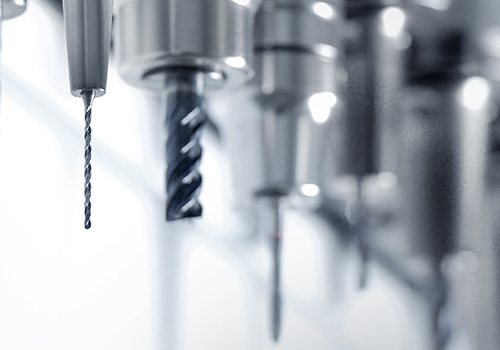
Historically good: our drills set standards
Extraction programmes
Selected products for your requirements
Clamping system
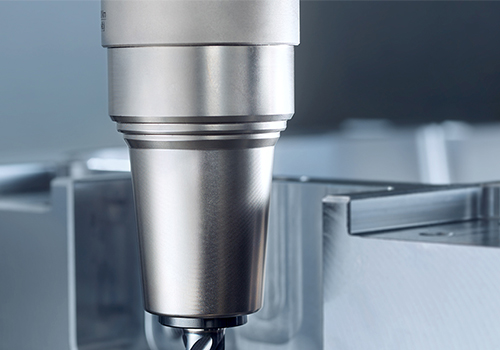
Modern tool holders for flawless machining results


